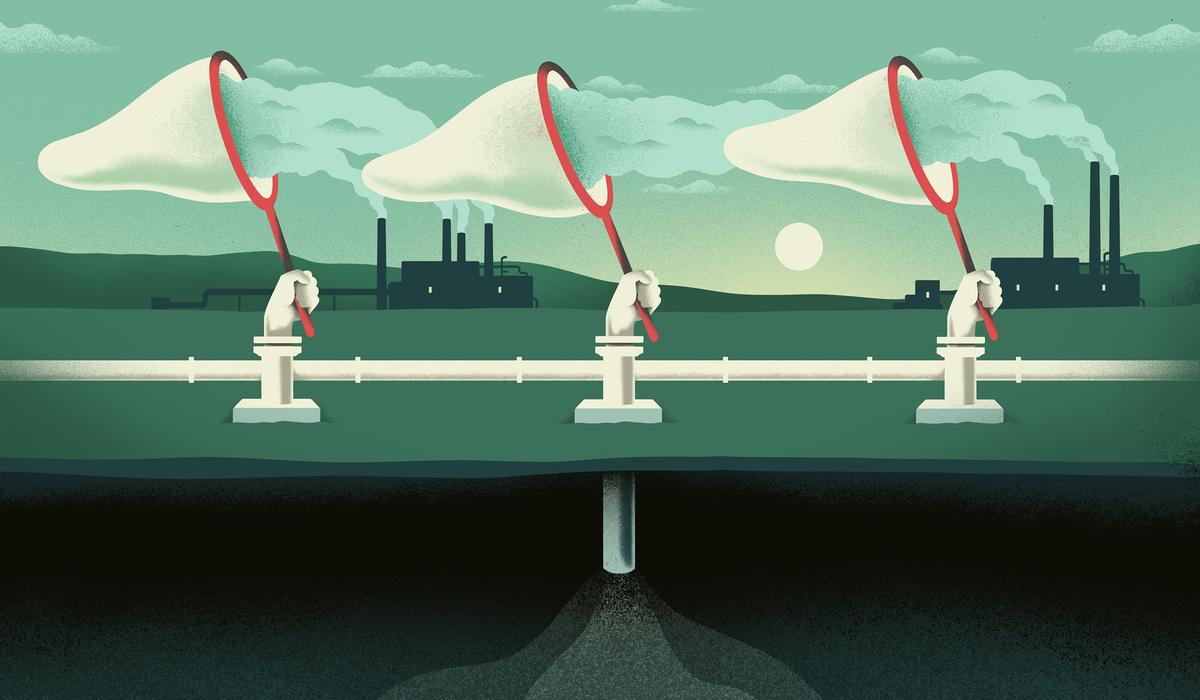
Far beneath the frozen ground of northeastern Alberta, the Basal Cambrian Sandstone formation awaits its rendezvous with ambition.
A hole will be drilled at the surface above that 500-million-year-old formation, a hole no bigger than half a metre in circumference, but a hole that will bring this country’s largest energy project to the edge of the finish line. Down that hole will be injected, to a depth up to 2,000 metres, liquified carbon dioxide. It will have been transported by pipeline on a journey of more than 400 kilometres, and although the drilling of the well will be underwhelming in its simplicity, it will be historic in its symbolism.
It would be the final sprint in the world’s largest carbon capture and storage undertaking, if it can get there.
The Pathways Alliance, newly rechristened as the Oilsands Alliance, is a coming together of five oil and gas titans – Canadian Natural, Cenovus Energy, ConocoPhillips Canada, Imperial and Suncor − representing about 95 per cent of Canada’s oilsands production. Normally competitors, they’ve aligned to advocate for and change the narrative around the Canadian oilsands, long condemned as agents of environmental damage.
The Alliance is proposing a giant carbon capture and storage (CCS) project that would trap harmful emissions and return them to the ground. CCS isn’t new, but the scope of this project takes it into another realm.
“At its very simplest level, carbon capture and storage means you take these greenhouse gas emissions that would otherwise be emitted into the atmosphere, you capture them, and you put them underground for permanent geologic storage,” Alliance president Kendall Dilling told a podcast in December. “That sounds simple and conceptually, it is. But there’s some big pots and pans in doing that.”
Ah yes, those pots and pans.
This would be the world’s largest carbon capture and storage project, eventually storing up to 40 million tonnes of CO² per year, making it 40 times larger than Canada’s biggest CCS project operating today, Shell’s Quest Facility northeast of Edmonton. That 40-million-tonne target per year represents two-thirds of the total carbon dioxide that’s been buried in this country as of 2026. As another comparison, consider that the Boundary Dam carbon capture facility in Estevan, Sask., took 1,700 workers three years, or 4.5 million man hours, to construct, and Pathways is proposing − in one year − to store almost six times what it’s put away over 11 years of operation.
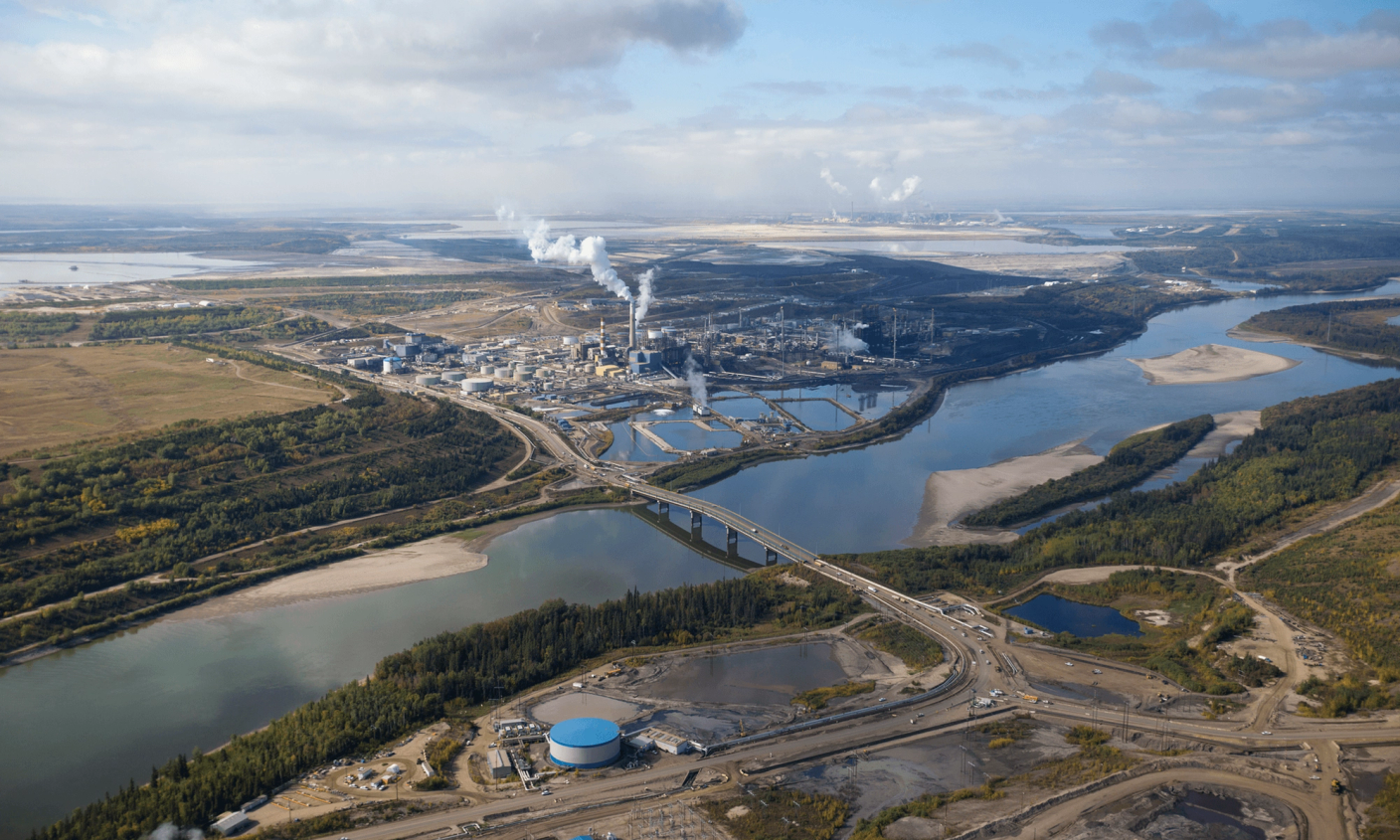
As envisaged in March of this year, the Pathways project would comprise 11 to 14 capture facilities built at oilsands operations which then would move the CO² through a series of feeder pipelines linking into a larger line that would ultimately take it to a storage hub near Cold Lake, Alta. It would be built in baby steps between 2027 and 2040, and cost an estimated $20 billion, with another $1 billion per year in operating costs − that’s at least 15 times what it took to build the Quest facility.
Pathways did not make an executive available for this article, though a representative did answer written questions. Those privy to the details of the project, a number of whom spoke to Be Giant, acknowledge there are major speed bumps that could knock it off the road, including its enormous price tag and ongoing negotiations between the federal government and Alberta over carbon pricing. A memorandum of understanding (MOU) signed last year by the two governments links progress on Pathways to a promised bitumen pipeline to the West Coast; Dilling has estimated the two projects combined would inject $100 billion in capital investment into the country.
There’s a lot at stake. Global fossil fuel use is not about to disappear. Even the most ardent environmentalist will admit as much in 2026. For those watching closely, pragmatism seems to be the prevailing mood. CCS will not save the planet, but is key to transitioning to substantial emissions reductions, one important hammer in a bag of available tools. “We need everything,” says Breanne O’Reilly, the chief operating officer at the International CCS Knowledge Centre. “There is not one solution that’s going to solve it all. Our biggest risk as a planet is doing nothing and waiting for that perfect opportunity. I don’t think it’s going to exist in the foreseeable future. We’ve got to use all the tools we have.”
The science and engineering behind this particular tool are fairly astounding.
On that Hub Dialogues podcast, Dilling laid out a checklist of positives that would make Pathways doable, including the fact that Alberta’s emissions are highly concentrated in the oilsands. The province is also blessed with the geological formations and capacity needed for storage. It has 79,000 megatonnes of CO² storage space, according to a 2024 study by Clean Prosperity: Net-Zero Pathways for Canada Project. (Saskatchewan has much more space, but Alberta’s is located much closer to high-emissions facilities.) Alberta also has the scientists and engineers who know how to build this.
Carbon capture and storage has been around since the 1970s, though it’s been constantly evolving. Momentum is certainly building now. The Global CCS Institute, based in Australia, counts 77 CCS facilities operating around the world in 2025, up from 50 only a year earlier, with another 47 under construction. Many of these, however, are strictly commercial enterprises that have neither the government regulatory environment nor the financial incentives to capture enough CO² to help much in the fight against climate change. Another 610 facilities are in various stages of development; the Institute anticipates emissions captured will rise fivefold by 2030.
Canada has made some notable progress already. The Alberta Carbon Trunk Line (ACTL), completed in 2020, is currently the world’s longest CCS project. Its 240-kilometre pipeline takes CO2 from the Sturgeon Refinery and from Nutrien’s Redwater Fertilizer plant for injection into depleted oil reservoirs northeast of Red Deer. It’s got the design capacity to transport 14.6 million tonnes per year of captured CO², though it’s been running a good deal below that level. Shell’s Quest project transports CO² more than 80 kilometres, storing it more than two kilometres underground. And the granddaddy of them all, the Boundary Dam project in Estevan, Sask., has captured and stored nearly seven million tonnes of CO² in its lifetime.
The ambition of Pathways dwarfs them all, not only in size but in the technological and transportation challenges.
The first step for a CCS project is to stake a claim to pore space, the underground caves and crevasses where CO² can flow because minerals or gas have been extracted, creating storage room. The province of Alberta owns it all, every underground gap. In 2022, it sent out a public call for those who wish to purchase pore space rights. The cost to a major oil company for those rights would be the equivalent of loose change found under the sofa cushion.
Each company will then have to build its own carbon capture system. There is no cookie-cutter system and no two will be precisely the same. The technology will depend on available space and whether the capture system is being built onto an existing structure or on its own.
One key early consideration is the analysis of the flue gas from an operation’s emissions stack. Depending on how the oilsands are converted into crude or the amount of electricity being used in an operation, the CO² content of oil patch emissions can range from as high as 12 per cent to as low as four per cent. The most popular method of testing flue gas is known as the Continuous Emissions Monitoring Systems (CEMS), which sees a probe inserted into the emissions stack and a sample sent through a conditioning system that removes water vapour, particles and any harmful contaminants and provides a dry, clean sample for analysis.
The secret sauce in carbon capture are the amines, a class of chemicals used in the production of dyes, detergents and cosmetics. Amines are highly effective, but expensive.
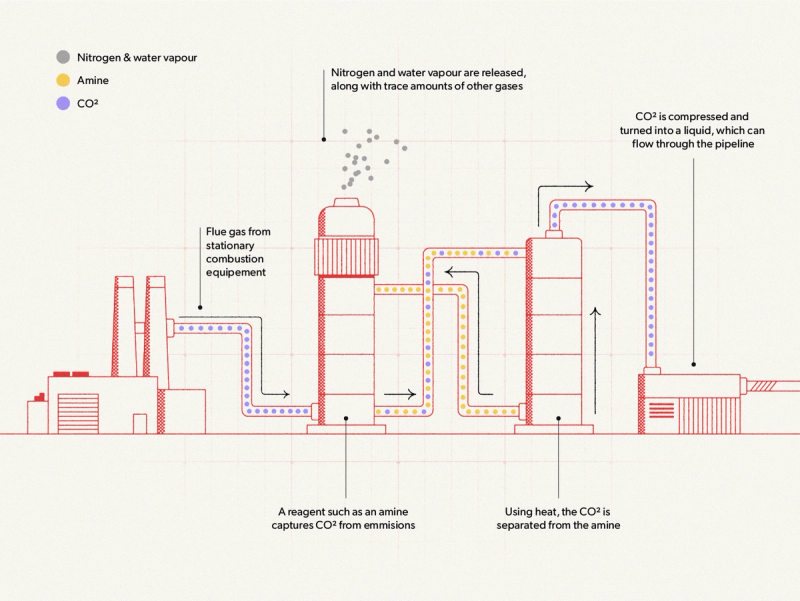
To capture the CO², the flue gas from the stack is diverted through a duct to the capture system where it is pre-treated to remove any impurities, then sent to an absorber tower containing an amine-based solvent. The amine bonds to the CO² molecules, creating “rich amine.” This rich amine then moves to a stripper where it’s heated to release the bond. The CO² is captured separately and the amine runs back through a filtration system to be reused.
Once the CO² is captured, it’s sent to a compression and dehydration unit where it’s compressed at up to 2,500 pounds per square inch into what is known as supercritical, or dense phase, CO². This in itself is an energy-intensive and expensive process. The compressed CO² is then ready for transport via pipeline.
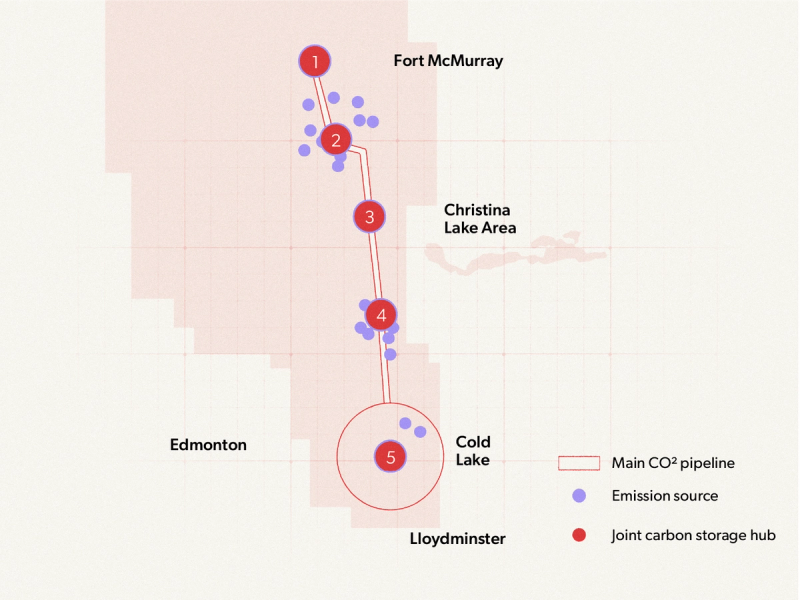
Canadian National will head the Pathways transport and storage phase. Dubbed the “CO² Transportation Network,” it envisions as many as 16 pipeline segments connecting carbon capture sites in the Fort McMurray, Christina Lake and Cold Lake oilsands developments to the main pipeline. These segments would be one to 49 kilometres in length with diameters of 20 to 51 centimetres, depending on the volume of CO² they are carrying.
These laterals would connect to the much larger main transportation pipeline, some 330 kilometres long, taking the CO² to the storage hub in Cold Lake. Hub distribution lines would then take it to the injection wells. The project anticipates drilling 19 well sites, all with monitoring stations on the surface. The distance between those wells has not been laid out by Pathways, but the separation would be part of the risk assessment in the monitoring plan that must be approved by the province.
Monitoring on injection means keeping track of the “plume,” a measure of the depth and makeup of the injection, to show where it is going. “Is it going north-south, is it spreading evenly, is it going down cracks you didn’t anticipate?” explains Lisa Doig, the CEO of Carbon Management Canada. “This gives you a chance to make any changes if needed.” Instruments are buried in the ground to measure any ground movement while drilling, and sensors will indicate the pressure of the injection.
When the CO² is injected into the reservoir at the bottom of the well, the cap rock becomes crucial. Cap rock is impermeable, the seal that keeps the CO² at the bottom. Think of the CO² passing through the holes in the rock formation as a Rice Krispie square, says O’Reilly, from the CCS Knowledge Centre. “The CO² can go in through the squares, but the cap rock would be the fudge on top of the Rice Krispie squares. You can pour water on top of the fudge and it’s not going to go in.” The cap rock can typically be shale or limestone or even clay. To get to the storage reservoir entails drilling through a seam in the cap rock, but it does not affect the seal. Over time, the CO² will become part of the rock.
But there’s no such thing as CO² storage being “finished.”
“For these projects to work long-term, the measuring and monitoring and verification are really important to give the public certainty,” Doig says. “It’s not just storage and it’s over. This is a lifetime process.”
The Alliance says its monitoring and measuring hub would consist of a meter station, well head, communications and control systems, emergency shutdown system and all necessary equipment to support subsurface monitoring and surveillance of the CO². Its “closure plan” requires ongoing monitoring of the gas after it has been stored and capped.
The Pathways project, if it does get completed, will be a scientific and technological marvel, but it will face detractors at every step. There are continuing questions over capture efficiency − the Boundary Dam project, for example, started out capturing an estimated 57 per cent of CO² emitted and took years of tweaking to get to 90 per cent. The energy consumed building and operating the capture facilities creates its own emissions too.
The biggest challenges break down into two broad categories – social licence and economics.
Although its pipeline will adhere to existing rights-of-way as much as possible, winning approval from Indigenous and other communities for pipelines has often proved the toughest challenge for giant energy projects in Canada. Pathways says it is committed to ongoing consultations with Indigenous and local communities affected by the pipeline path and has met with Indigenous groups in Fort McMurray, Lac la Biche and Bonnyville.
There’s also continuing skepticism about how much difference CCS can really make. The World Resources Institute estimates that CCS projects currently capture 0.1 per cent of global greenhouse gas emissions. If every project currently under construction or in planning were magically added to those in operation today, that figure would rise to between 0.9 and 1.1 per cent of global emissions.
And even if the oilsands emissions are captured at their source, the inevitability of so-called Scope 3 emissions means GHGs will still enter the atmosphere from South Korean vehicle tailpipes or American aircraft engines or Indian diesel generators. Even the success of Saskatchewan’s Boundary Dam project, critics say, has merely validated the continued use of coal.
D. Nathan Meehan, a professor of petroleum engineering at Texas A&M University and author of the 2025 paper Barriers to Sustainably Scaling Carbon Capture: Risks and Challenges in CO² Capture, Use, Transportation and Storage, notes that no matter how much carbon gets captured in Canada, “we only have one atmosphere. We’ve got to keep in mind that the emissions we would be recovering are a small fraction of the total emissions of the crude oil.”
The “bespoke” nature of each capture facility means reductions in scale-up costs will be much more difficult to achieve, he adds.
Indeed, the other fundamental question facing Pathways is whether something of this scale can ever be made to work, given the economics. A study earlier this decade for IOP Science, authored by a team of Canadian, American and British scholars, found the bigger the project, the more likelihood of failure. Of the 149 CCS projects across all industries that the U.S. expected to come on stream by 2020, more than 100 never did.
The record is slightly better for the oil and gas industry, but of the 14 most expensive CCS projects planned in the U.S., 13 were abandoned and one pivoted away from CCS mid-project. “The record of CCS project development is overwhelmingly one of failure,” they wrote. Some projects spent large amounts of money on planning and engineering studies before being halted ahead of a final investment decision. Others flamed out more spectacularly, spending millions on construction before being abandoned in the face of economic realities.
And that’s the nub – at what cost? Can we remain competitive and be a leader on climate change at the same time? There is, after all, no “green premium” for cleaner oil – and some analysts doubt there ever will be, saying price will be all that matters for the foreseeable future. Others disagree. Prime Minister Mark Carney has suggested as much, notes Rick Smith, president of the Canadian Climate Institute, and is “quite right” that there “will be a premium paid for greener, less energy-intensive oil and gas and Canada is going to get there first.”
In the meantime, as O’Reilly points out, there are capital costs and operating costs to CCS systems. “So, you’re trying this thing while still trying to be a profitable business,” she says. “Most of them can capture 90 to 98 per cent of the CO². The issue is at what cost? If you’re spending all your money getting your CO² captured at 90 per cent, you’ll go bankrupt. That’s not a win for anyone.” Still, she says, “even removing 70 per cent is better than removing nothing.”
Carbon credits are expected to be the primary source of operating revenue for Pathways, and many analysts believe the project’s future hinges on whether revenue generated from the captured carbon will cover its costs. That in turn will depend on talks over carbon pricing between the consortium and the two levels of government involved.
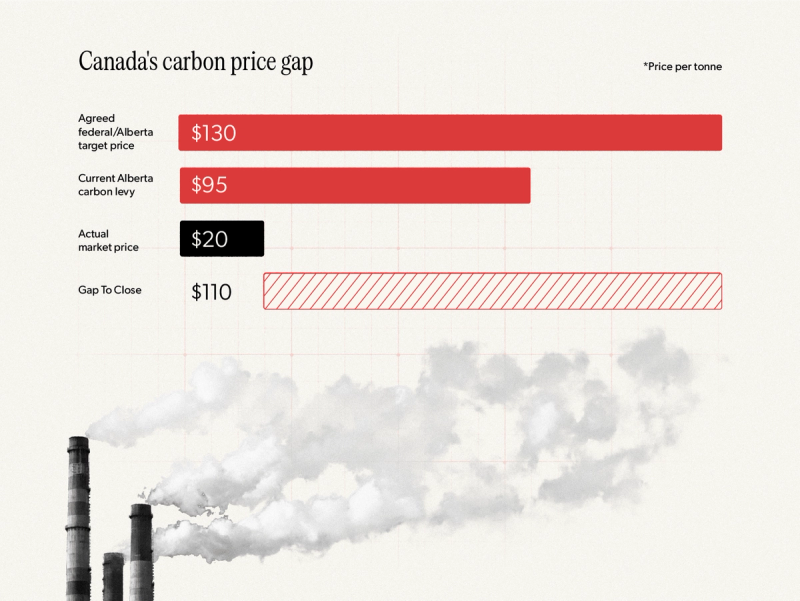
Three numbers dominate: the $130 per tonne carbon price (or tax) that Alberta and Ottawa have agreed to get to; the $95 per tonne price currently levied in Alberta and $20 per tonne, the actual price of credits on the Alberta carbon market (thanks to provincial loopholes and concessions that flooded the market with credits). Polluting companies that are below their emissions threshold can sell carbon credits on the open market and make money, but those that exceed targets must buy carbon credits.
The MOU signed by Carney and Alberta Premier Danielle Smith last November included a vow to bring the price up to a floor of $130 per tonne at some unspecified point in the future. At that price, the Pathways Alliance companies could earn credits valuable enough to provide an incentive to proceed with the project. Instead, the consortium appears to be balking at the increase and seeking more concessions from governments. The change in tone from the oil and gas titans is striking. Canadian Natural Resources CEO Scott Stauth has said he doesn’t believe the Alliance members should pay any carbon tax in addition to the costs incurred in building and operating CCS projects. Alberta, meanwhile, seems to be slow walking any increases to get to the $130 price.
Talks are “incredibly challenging,” one insider said. The MOU was meant to lead to a fuller agreement by April 1, but the talks have dragged on past that deadline. The odds of Pathways proceeding sit at around 50-50, insiders say.
Carbon capture and storage could be that needed first step toward a transition to fully decarbonized oil and a world of renewables. The need for urgency on climate change is such that even a former Green Party politician is taking a decidedly pragmatic view. Andrew Weaver, a professor of earth and ocean sciences at the University of Victoria and former British Columbia Green Party leader, has a message for those who question intentions driving the Pathways project and insist more renewable energy options now are the answer. “If you think we’re going to this perfect renewable plan overnight,” he says, “go tell Vladimir Putin that. While you’re at it, tell China that and I suggest you go to Washington and tell Donald Trump that. Planting trees ain’t going to cut it.”
Given the complexities − of engineering, construction, financing − getting a project like this from the idea to reality is a mammoth undertaking. That it’s on the drawing board at all is perhaps a testament to how much is at stake for the climate and the country.