What it is
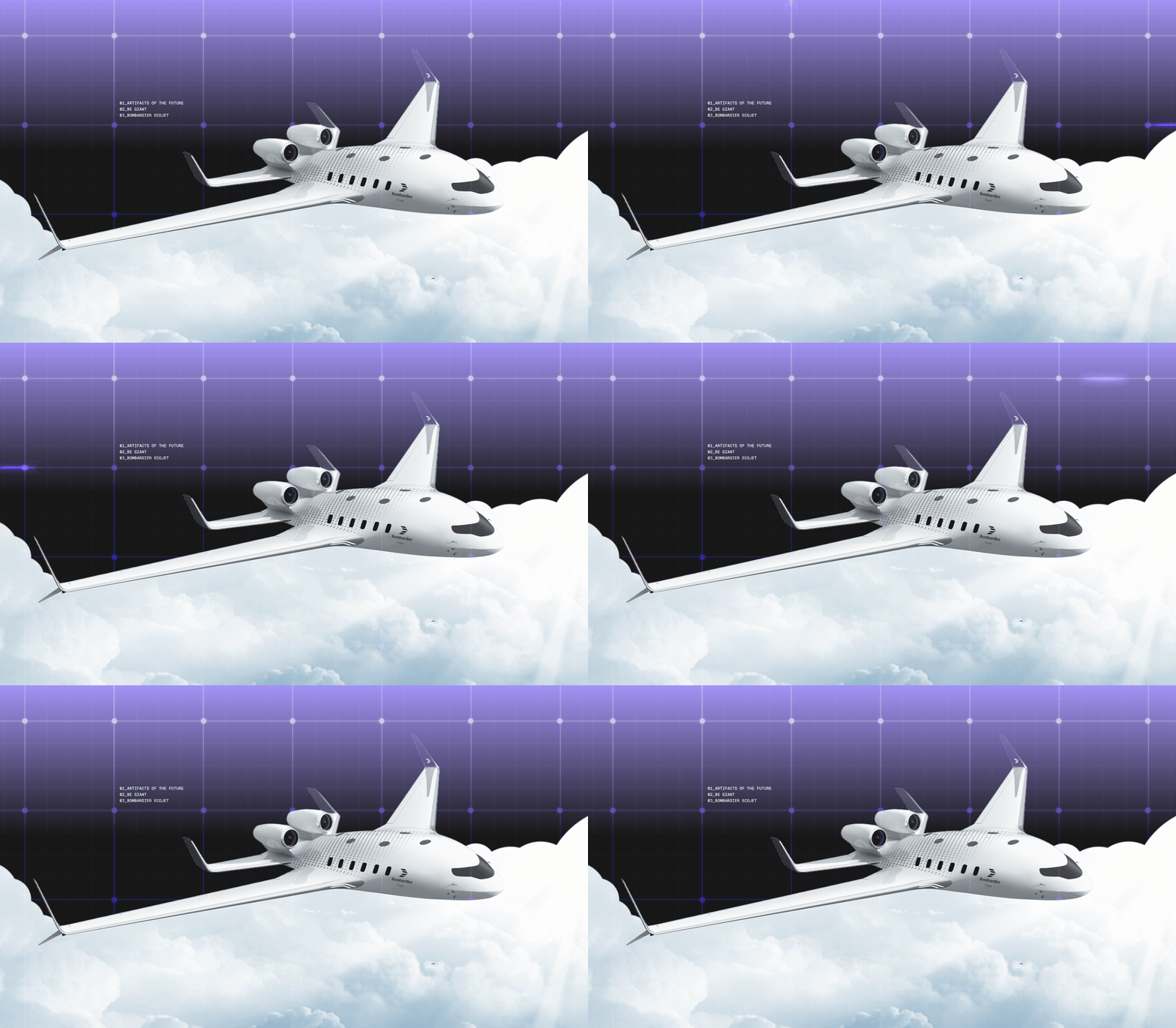
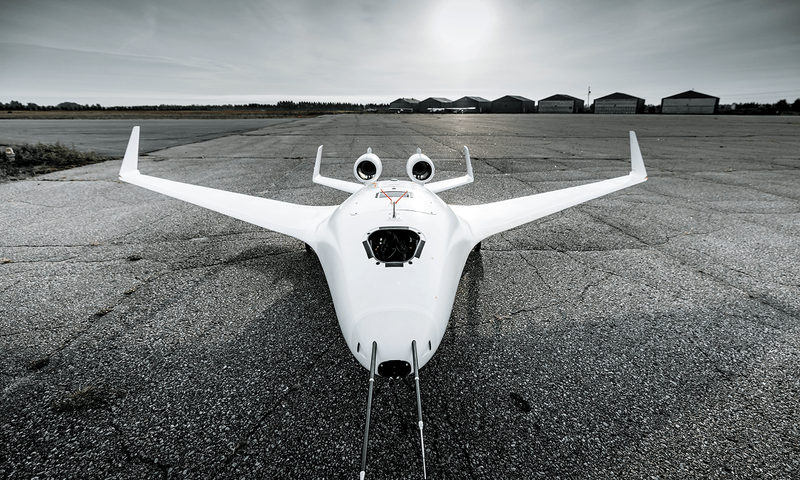
The EcoJet, a business jet prototype aimed at making business flight more sustainable through a major redesign, new technologies and sustainable fuel.
The jet’s shape – called a blended wing body – looks like a stingray or even a flying squirrel. It’s intended to mimic some of those animals’ properties to help the plane travel farther with less effort and fuel.
Who’s behind it
Montreal-based Bombardier Inc., the world’s second-biggest business jet maker, has been working on the EcoJet for more than a decade. The Centre for Aerospace Research (CfAR) at the University of Victoria has been its academic partner since 2017, and Quaternion Aerospace, based in Sidney, B.C., has helped develop scaled test vehicles. Bombardier first revealed the project in 2022 but has said little publicly about the R&D program.
The blended wing body design has existed since the 1990s, and Boeing worked with NASA and the U.S. Air Force on a research version in 2007. Two U.S. aviation startups, JetZero and Natilus, are working on blended wing passenger planes with hopes of reaching commercialization by the early 2030s. Airbus also says it’s considering the design for its larger passenger planes, but Bombardier may be the only private jet maker working on it.
What problem is it trying to solve?
The project aims to help slash greenhouse gas emissions by up to 50 per cent. Private jets represent just four per cent of civil aviation’s total emissions, which in turn make up 2.5 per cent of total global emissions, but aviation has been a stubbornly difficult industry to decarbonize.
How it works
First, a quick lesson on the aerodynamics of flight. There are two main forces an airplane experiences in flight, called lift and drag. Lift is generated by the flow of air around the airplane and keeps the plane aloft. Drag is the resistance the plane faces. The plane’s shape, size, weight and speed, as well as other factors, contribute to both forces. Features on the plane like flaps and rudders can be used to generate more of each – such as at landing, when you need more drag to slow down on approach.
The traditional airplane – the cylindrical body, called the fuselage, with wings attached at the midpoint and engines underneath – has too many “discontinuities,” or places that interrupt the flow of air and create more drag for the engines to fight against, says CfAR director Afzal Suleman. “It requires more power and more energy to move the aircraft in the air,” he says.
The EcoJet’s seamless blend of the wings into the main body reduces drag. The larger central body also creates more surface area for air to flow around, which generates better lift. According to Bombardier, the middle part of a blended wing body plane will generate between 20 and 40 per cent of its lift, compared to just 10 to 15 per cent for a regular plane’s fuselage.
How that helps
Better lift and less drag mean the plane will burn less fuel and enable the use of smaller, lighter engines. A Bombardier spokesperson said the EcoJet is intended to eventually be compatible with a host of current and future propulsion technologies, and the company has said in the past that it’s looking at the use of hybrid-electric propulsion or, more likely, sustainable aviation fuel.
With the engines at the back of the EcoJet above the tail, as opposed to their usual place at the sides of the fuselage, the plane should be quieter, too, both inside and out. For passengers, the cabin will be more spacious: instead of the typical narrow cylinder, it will be wider and more rectangular inside.
The challenges it faces
The plane’s novel shape requires Bombardier to create new “control laws,” or protocols for flying the plane – which will represent a massive technical feat.
Airplanes can move in three dimensions: the movement of the plane’s nose from side to side, called the yaw; the movement of its nose up or tail up, called the pitch; and the movement of its body clockwise or counterclockwise, called the roll. Movement in one of these dimensions impacts at least one other. Planes have “control surfaces” that pilots use to manage these movements and keep the plane stable: flaps, slats and ailerons on the wings, and elevators and the rudder on the tail.
The EcoJet’s shape creates more of those elements for pilots to operate. “It gives us a bit more ingredients, in a way,” Suleman says, and makes the plane a bit more stable. But this new way of flying must be rigorously tested. The Bombardier spokesperson said the company has integrated control surfaces “wherever feasible” on test planes to see how those features interact during flight and how they respond to the new control laws. It refines the new control laws based on what it learns.
How is it tested?
Bombardier sends CfAR a black box with the proprietary control system and CfAR’s team of 15 full-time engineers and seven students test it first over thousands of hours of simulation, then in a four-metre-wingspan scale model and finally in a larger, six-metre model.
“These control laws are new and complex so can we validate it in flight so we have certainty … about the performance of these controllers, [so that] if the transition is done to full-scale, we’ll have a high level of confidence,” Suleman says.
Suleman said the team has had a couple of setbacks in the flight tests so far, caused by uncontrollable factors like a wind gust at takeoff or a landing that the control law wasn’t prepared for. The scale models come equipped with an emergency parachute system to rescue the plane if something unexpected happens in the air.
What’s next?
There’s still work to do, and it’s not yet clear when EcoJets will take to the skies. Suleman estimates that CfAR’s work on testing the new control laws will continue for another two to three years.
Bombardier is currently in Phase 2 of the research project, which involves trial flights of an 18-foot-wide version – about 16 per cent of the size of a long-range jet. It took its first in a series of test flights in the fall of 2023. Bombardier said in 2024 that those flights demonstrated the potential to reduce emissions by up to 20 per cent in comparison to current aircraft designs.
Bombardier declined to disclose any timelines for the project’s next phases, but said the research program is ongoing, with more data coming out of “frequent flight test campaigns.”