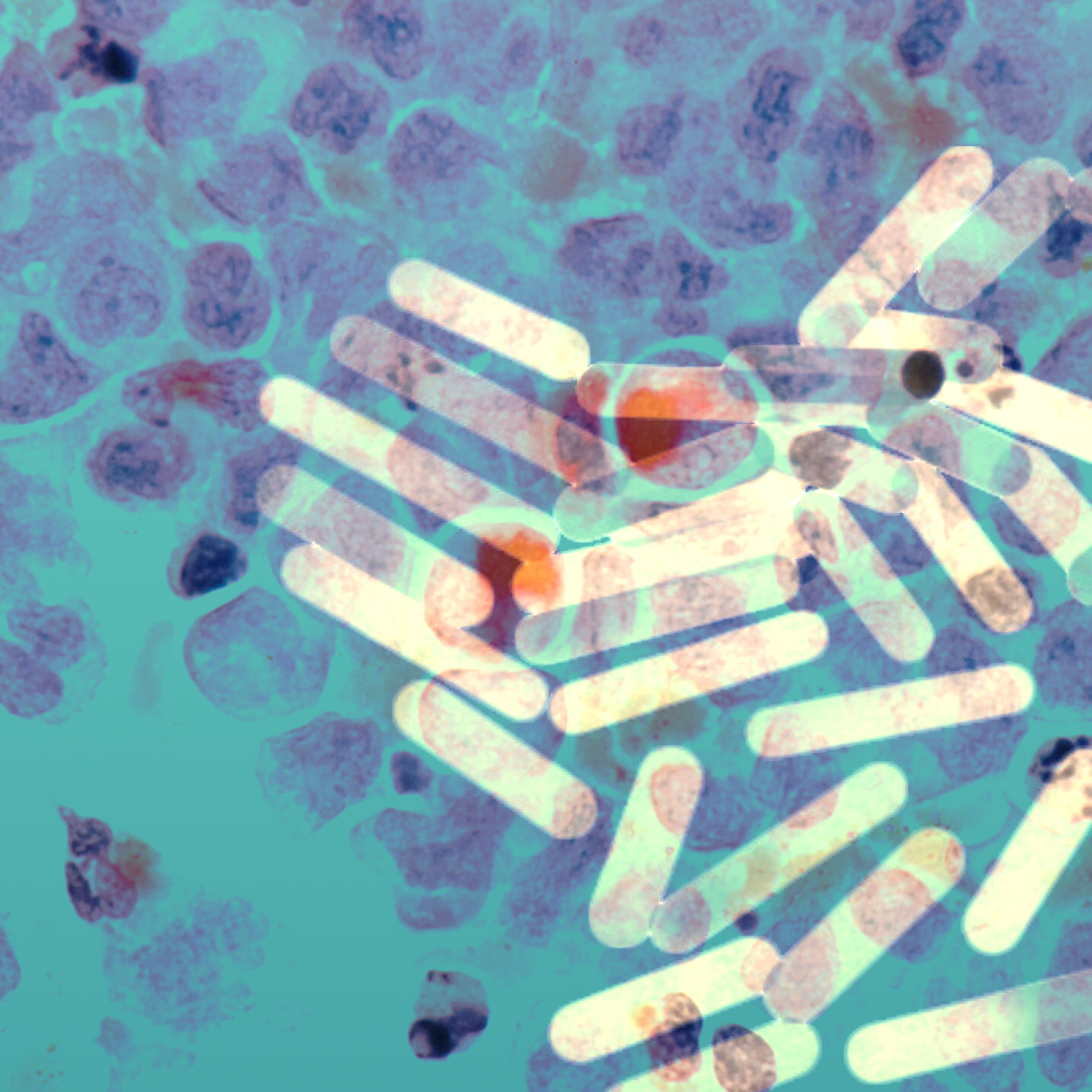
In a small, cluttered office at St. Francis Xavier University in Nova Scotia, two scientists are excitedly explaining why they think they can fight cancer with gold. Specifically, they’ve created a particular gold nanoparticle – a rod of tiny atoms of gold – that can be aimed at cancer cells and then superheated to destroy them. Early results have shown promise and turbocharged the researchers’ enthusiasm.
The story starts in 2006, when scientist Kulbir Singh arrived at St. FX from India to work as a postdoc with Cape Bretoner Gerrard Marangoni, a professor of chemistry.
Clearly, the two experienced a spontaneous combustion of shared curiosity – to interview them is like managing boisterous schoolboys: they finish each other’s sentences, veer off on tangents about their childhoods and revisit their greatest hits of scientific problems solved. But their biggest challenge yet has been to create a non-toxic gold nanorod that won’t harm the body, and they feel sure they’ve cracked it.
Experts in creating surfactants – chemical compounds used to coat surfaces – they first had to find a biocompatible one that would trigger the chemical reactions needed to shape and stabilize tiny gold particles, each about a billionth of a metre in size, into nanorods of the optimum length and width. Up until now, the standard coating agent for gold nanorods has been a surfactant with the extraordinary name cetyltrimethylammonium bromide (CTAB, for short). Unfortunately, CTAB is toxic, which limits its use in the human body.
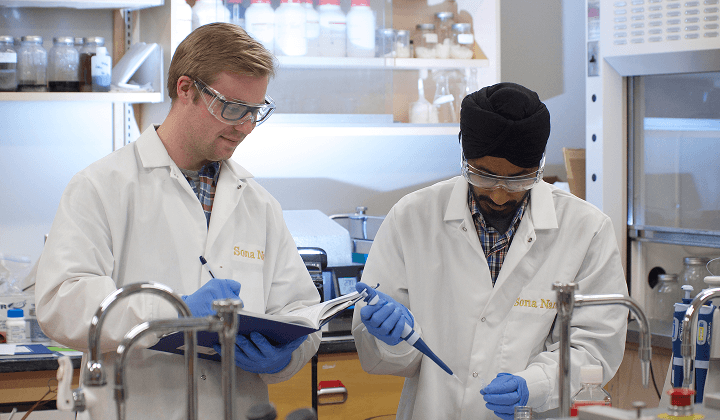
When they first began studying gold nanorods more than 10 years ago, Singh and Marangoni were seized with the same questions. “I was, like, why does everything have CTAB in it?” explains Marangoni. “And Kulbir asked the same question. And I said, ‘There’s got to be another surfactant.’”
They had some “wacky” ideas, they say, which they had to meticulously test. “We observe every single [chemical] reaction and keep moving step by step. Honestly, it was baby steps,” says Marangoni. “At one point, I was kind of giving up,” says Singh. “We were at a point where we could see quite a few rods. And then other times we changed some conditions a little bit, and things changed.”
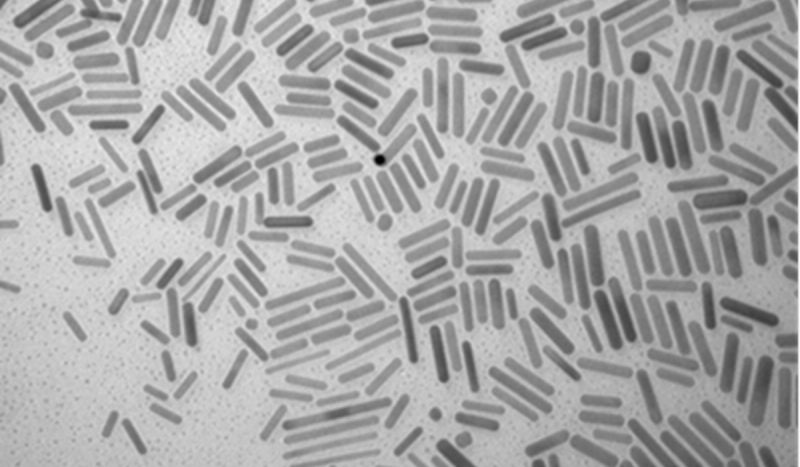
Months later they had a breakthrough, seen through a sophisticated microscope. Right away, “we knew [the shaping of the gold nanorod] was significant,” says Singh, who remembers the exact moment on a Sunday morning when he was too impatient to wait until Monday and returned to the lab to check on a reaction he had set up.
“I called Gerry and told him what happened.” Their formulation had achieved the optimal shape for gold nanorods. “And he was, like, ‘No way.’ He was out for a walk and came right over.” Did they celebrate? “Scientists do celebrate … but we are driven to prove it. So, we asked ourselves, ‘What did we do and can we reproduce it?’” They discovered they could produce a consistent quality of gold nanorod and scale up. And just like that, their company, Sona Nanotech (named for the Hindi word for gold), was born.
Gold has long been used in medical applications. Stable, non-toxic and resistant to rusting or corrosion, it was used as early as 2500 BCE in China and India to treat leprosy, epilepsy and the plague. Gold salts have even been administered to treat rheumatoid arthritis.
In the last 20 years, biomedical interest in gold nanoparticles, which can be shaped into stars, spheres, rods and snowflake-like clusters, has exploded. They’re used for a variety of diagnostic purposes, including pregnancy and COVID-19 tests, as well as medical imaging.
But an alluring breakthrough application is for cancer treatment. “This is a real direction changer in cancer tumour biology,” says Dr. Carman Giacomantonio, a practising surgical oncologist at Halifax’s QEII Health Sciences Centre and professor of surgery at Dalhousie University. Giacomantonio joined Sona Nanotech as chief medical officer in 2024.
Many researchers in Canada and around the world are working on how to use gold nanoparticles for cancer treatment. There are challenges: the expense of the gold; how to target tumours deep in the body; how and if the gold nanoparticles exit the body; and what the long-term effects are if they don’t.
Most research studies are in pre-clinical trials – or not in humans, in other words. Sona Nanotech is at the forefront as they await approval from Health Canada to do a further human trial, building on a successful one they conducted in Chile last year.
Traditional cancer therapy options include radiation, surgical removal of tumours and chemotherapy and immunotherapy injections, which flood the whole body, targeting cancer cells but damaging healthy ones.
Gold nanoparticles are of intense interest in cancer treatment because of their ability to turn light into heat, a process called “photothermal conversion.” Sona’s proprietary gold nanorods have an ideal shape and length for this process, acting like a tuning fork, vibrating at specific frequencies when struck by light.
In the pilot human trial in Santiago, Chile, a location chosen for cost efficiency and a faster regulatory process, among other considerations, Sona’s nanorods in liquid solutions were injected directly into tumours in 10 patients who had stage 4 immunotherapy-resistant melanoma, the deadliest of skin cancers. The tumour area was then zapped for five minutes with a laser. The near-infrared light heats up the rods, destroying cancer cells and disrupting the tumour micro-environment. The laser treatment was repeated a week later. Only one of the patients reported an adverse effect, which was not related to the treatment. Within two weeks, eight of the 10 patients showed a measurable response. The tumours in six of the patients showed no detectable cancer, according to their report.
The Sona Nanotech team chose to target melanoma because, first, it’s on the surface of the body, easy to access and inject directly. Also, melanoma presents an immunity conundrum. On the one hand, it has many mutations that the immune system can target. But on the other hand, these are often hidden or masked, preventing the immune system from “seeing” them. Immunotherapy has been transformative for melanoma, compared to other cancers such as lung, head, neck and kidney, but it still only produces a 40 per cent response rate.
The breakthrough associated with Sona’s gold nanorods is that they turned a “cold tumour” – one that dampens immune response – into a “hot tumour,” one that the immune system attacks.
“We needed to prove that we could do this [gold nanorod] injection safely and that people could tolerate it,” Giacomantonio explains. That was the extent of the Chilean study, which was approved and overseen by an ethics committee there.
“With such a high response rate of 80 per cent and no toxicity, it wouldn’t have been sensible to do anything less than progress,” he says. The trial “gave the company confidence to pursue [the therapy] further.”
Sona has applied to Health Canada to conduct a human trial in Nova Scotia with 30 to 40 melanoma patients that would involve a more refined protocol Giacomantonio has designed: injecting a tumour with Sona’s gold nanorods as well as an immunotherapy drug (for instance, interleukin-2). Because roughly two milligrams of Sona’s gold nanorod solution is injected directly into tumours, rather than a larger amount intravenously, “we eliminate body distribution for the most part,” says Giacomantonio. “We can say with pretty high confidence that there’s not going to be enough gold to challenge someone’s system.”
The hope is that the immune response, which will have been enabled and boosted, will then destroy metastases elsewhere in the body.
He believes the treatment will be “jet fuel for melanoma treatment.” But Giacomantonio is not stopping there. He’s already working to apply the treatment to breast, brain and blood cancers.