Moore’s Law, that famous maxim of computer science, holds that chips double in power every two years. The field of medicine is subject to a more demoralizing axiom: Eroom’s Law (that’s Moore backwards), which dictates that the life-saving science of drug discovery gets slower and more expensive with time, doubling in cost every nine years. It now takes an average of 12 years and $1 billion – and counting – to bring a new medicine to market.
A leading reason for this logjam is the fact that animal testing, the go-to strategy for gauging a treatment’s safety and efficacy, is a pretty lousy predictor of how drugs will behave in the human body. Nine times out of 10, treatments that succeed in rodents fail once they enter clinical trials, effectively throwing years of work and R&D investment down the drain.
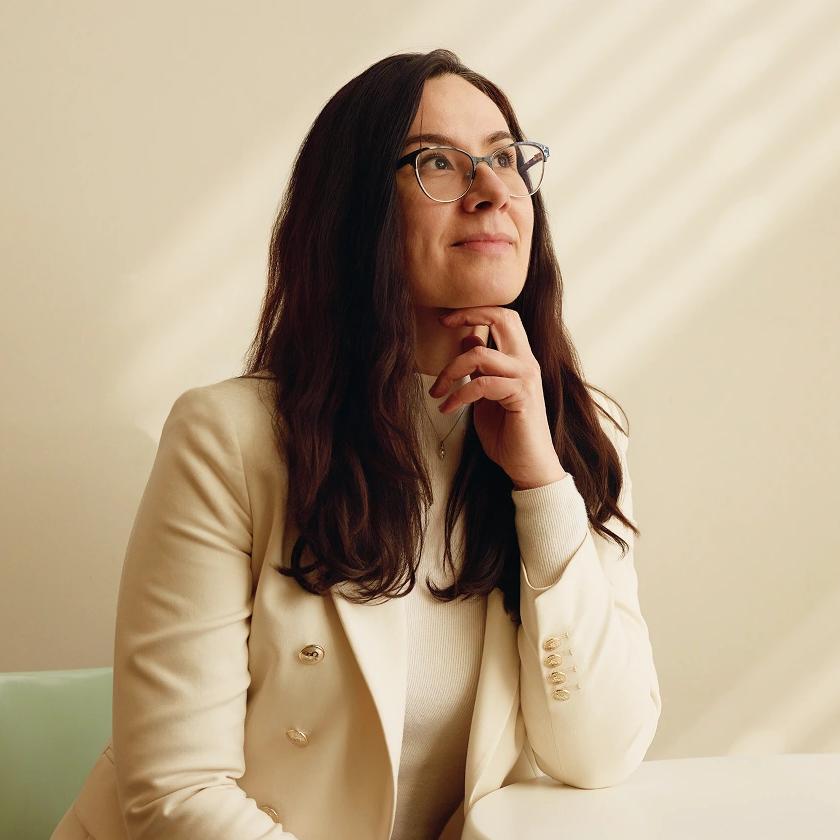
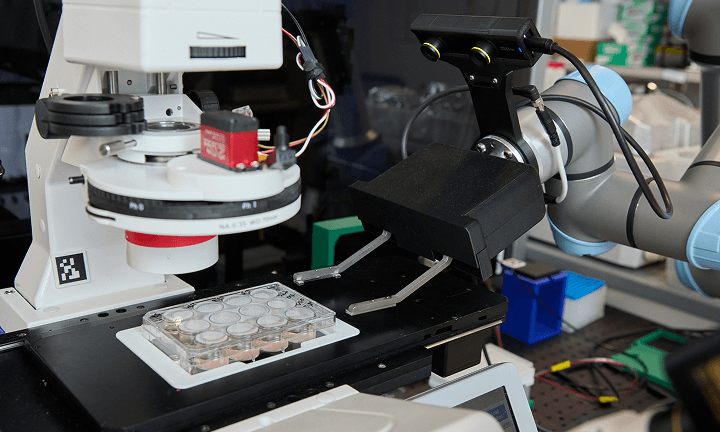
Milica Radisic, a professor at the University of Toronto, might just hold the secret to breaking Eroom’s Law. One of the world’s leading tissue engineers, Radisic leads a lab that transforms human stem cells into microscopic organs: tiny beating hearts, kidneys the size of sesame seeds, lungs smaller than a grain of rice. With the help of AI-powered robot arms, the lab’s scientists grow thousands of these miniature globs of flesh on transparent silicone platforms, each outfitted with biosensors that can monitor the tissue in real time. Radisic and her team are betting that, by testing new drugs on these so-called organs-on-a-chip, they can better understand how they’ll affect humans, reducing the amount of time and money it takes to launch new medicines into the world.
For decades, Radisic pursued this potentially revolutionary idea in the quieter corners of academia. She entered the field of tissue engineering a quarter-century ago, before most people had even heard of it. “It’s like what AI was 15 years ago,” she says. “Nobody knew about it except some professors talking about it at obscure conferences.”
But now, thanks in part to Radisic’s contributions to the field, organs-on-a-chip are about to hit prime time. Last year, the FDA announced its intention to phase out animal testing in favour of human-relevant methods like those on display in Radisic’s lab. “This new announcement, it changes everything,” she says. For years, she’s been waiting for the day when organ-on-a-chip tech isn’t some newfangled curiosity but a default way to do drug discovery. “That’s happening now. It’s becoming mainstream.”
On paper, Radisic is intimidating – the sort of genius-grade professor whose courses you might be too terrified to take. Her CV runs 142 pages long, outlining the more than 260 papers she’s published, the 40-plus awards she’s won, the two biotech companies she’s founded and the roughly $100 million she’s brought to U of T through various grants, including a first-tier Canada Research Chair position, which is reserved for academics who are recognized as world leaders in their fields. Robert Langer, the MIT professor who’s widely regarded as the father of tissue engineering, puts it succinctly: “She is a superstar.”
But when I first met Radisic in the spring of 2025, she was entirely absent of ivory-tower ego – smiley, quick to praise her colleagues and unafraid to crack a self-deprecating joke. “Basically, we have robots cultivating human organs from stem cells,” she told me. “That sounds pretty bad, right? Like The Matrix.”
When Radisic was growing up in Serbia, tissue engineering was indeed still the stuff of science fiction. She already knew back then, though, that she wanted to be a scientist. By age four, she was marvelling at the stars and wondering what held them in the sky. Her curiosity led her to enrol in the chemical engineering program at the University of Novi Sad. But 1990s Serbia was not a particularly hospitable place for an aspiring academic. The country was facing mass unemployment, hyperinflation, political instability and extreme sanctions related to its role in the Yugoslav Wars. “It cut off all information flows,” says Radisic. “You’re not getting journals. You can’t really go to conferences. Just getting a book was hard. And so it was clear to me that if I wanted to learn things and have a career – or just be able to act on my curiosity – I had to leave.”
Radisic gravitated toward McMaster University for a few reasons: the sterling reputation of its engineering faculty, the fact that she knew people in Hamilton, and Canada’s welcoming attitude toward newcomers. At McMaster, Radisic discovered what she wanted to do with her life. One day, during the final year of her undergraduate studies, she walked into the campus library and picked up the April 1999 issue of Scientific American. Inside, she found an article in which Langer detailed how scientists could grow isolated cells into human tissue on tiny, trellis-like structures called polymeric scaffolds. “I was mesmerized,” Radisic remembers. “And I was like, ‘I want to dedicate my life to tissue engineering.’” By the end of the year, she was studying under Langer at MIT.
It was there that Radisic began working on the seeds of what would become her most significant contribution to the field, a heart-on-a-chip platform called Biowire. The invention was born out of a hunch: what if she used a surgical suture to mimic the string-like tissue that serves as an anchor for the structure of the human heart, seeded cells onto that suture and then jolted those cells with electrical stimulation to simulate a heartbeat? “We created something a little like a boot camp, where the cells were exercising every day,” says Radisic. As she gradually cranked up the mini muscles’ training regimen, she found not only that her faux hearts could tolerate 360 beats per minute – roughly double what an actual heart can handle – but also that such high levels of stimulation could help the hearts fully mature within six weeks. (In this case, “fully mature” doesn’t mean a beating, fist-sized, four-chambered heart, but a five-millimetre-long heart-on-a-chip that contracts with help from external pacemaking.)
In a field that was, at that point, defined more by big promises than actual products, Biowire was a breakthrough. “It was a demonstration that you can actually recapitulate cardiac physiology on a very small scale using a system that people can adopt,” says Gordana Vunjak-Novokovic, a fellow Serbian tissue engineer who served as Radisic’s postdoctoral adviser. Though both women left MIT in 2005 – Radisic went to U of T, Vunjak-Novokovic to Columbia – they remained close and later co-founded a company called Tara, named after a famous mountain in Serbia, to bring Biowire to market. In the 2010s, some pharmaceutical firms began integrating the product into their drug-screening workflows. But because the FDA still required animal testing, other potential customers were hesitant, Radisic explains. “People in pharma companies would ask me, ‘Why should I care about Biowire when the FDA is going to require a five-day toxicity test in a rat?’”
Now that the FDA has removed such requirements, those hesitations are evaporating. Health Canada may not be far behind. Radisic notes that Canadian regulators tend to follow the U.S.’s lead, and points to 2023’s Bill-S5, which paved the way for the elimination or reduction of animal testing in Canada. “I hope the changes will come soon,” she says.
Nonetheless, says Vunjak-Novokovic, the FDA’s announcement has already increased the appetite for organ-on-a-chip systems. “This is huge,” she says . “Big Pharma is really responding and asking more and more for the use of these systems.” She stresses that there are still plenty of challenges ahead, not least of which is the fact that human tissue is far more complex than rodents’. “When you work with mice, they’re all the same,” she says. “When you work with human materials, each patient is different – genetics, male versus female, age, hormonal situation, overall health.” But, Vunjak-Novokovic adds, “these challenges are countered with the enormous potential to advance science.”
Radisic is wasting no time in seizing the opportunity. “Milica is moving into this space pretty aggressively,” says her collaborator Alán Aspuru-Guzik, a chemistry and computer science professor at U of T. As a result, he adds, whip-smart students and scientists from all over the world are moving to Toronto to work with her and push organ-on-a-chip technology forward. “She is a magnet,” he says.
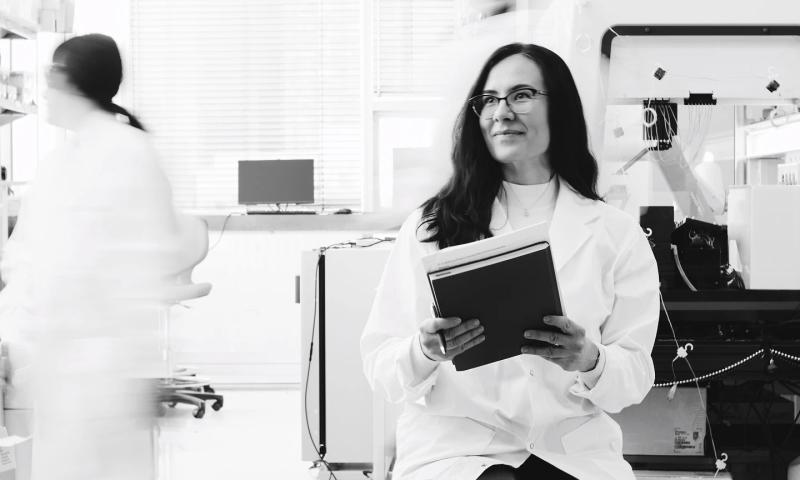
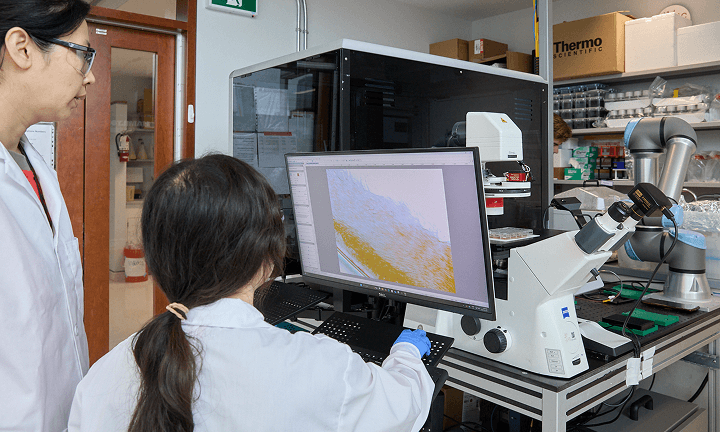
To see what all these brainiacs are up to, I take a trip to the human organ mimicry lab at U of T. The facility itself is an impressive sight: sleek white robot arms whirring to and fro, powerful microscopes perched over petri dishes and, as of my visit in late February, twinkling Christmas lights still draped across fume hoods. The most astonishing thing in the lab, however, is what I can’t see, at least not with my naked eye.
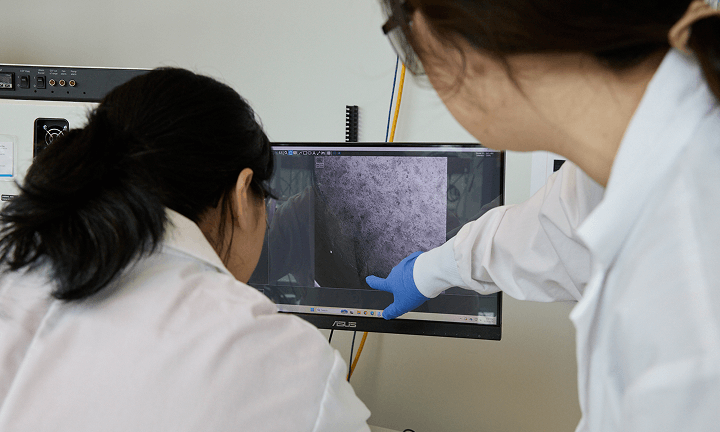
Ilya Yakavets, one of the lab’s staff scientists, leads me to an incubator, reaches inside and retrieves a plastic slate dotted with teensy test tubes. I can’t make out much, just a series of specks. But under a microscope, the flecks reveal themselves to be infinitesimal pieces of flesh. In other words, here on this iPhone-sized plank are hundreds of minuscule vasculatures – that is, arrangements of human blood vessels – happily throbbing away.
These itsy-bitsy pieces of tissue are still maturing, so Yakavets returns them to the incubator, placing them on a platform that gently rocks back and forth to expose them to a steady flow of glucose, amino and fatty acids. “We need to provide nutrients,” he tells me. Or, as his fellow staff scientist, Yimu Zhao, puts it, “It’s just like feeding babies.”
Just as remarkable as these wee organs is the way they’re made. Yakavets and Zhao grow them from induced pluripotent stem cells, a type of generic cell that, with some chemical signalling, can shapeshift into any other type of cell found in the human body. The team cultivates these tiny organs – hearts, brains, lungs, kidneys and the like — on specially designed chips that are equipped with biosensors and slotted with micrometre-scale channels through which extremely small volumes of fluid can flow. (The chips are made a few doors down inside U of T’s CRAFT Lab, another cutting-edge facility co-founded by Radisic.)
Once the organs are fully mature, the team uses those channels to expose the tissues to novel drug formulations, analyzing in real time how they react. And because the lab produces thousands of these organs-on-a-chip, they can quickly test the specimens with thousands of different dosages. Soon, the lab may even be able to place multiple organs on a single chip, providing a glimpse of how an entire human body might respond to a potential treatment.
I ask the staff scientists what they hope all these Lilliputian organs will achieve. Zhao tells me that, in the near future, they should be able to grow and experiment upon cancer cells, in search of a cure, or at least more effective treatments. Yakavets, for his part, is excited by the prospect of personalized medicine – growing organs-on-a-chip from an individual patient’s cells in order to test what specific treatments might work for them.
For now, however, they’re focused on improving the lab itself. Using a combination of machine learning, computer vision and robotics, they hope to teach their equipment how to autonomously grow organs-on-a-chip, experiment on the specimens and analyze the results, all without human input. “Basically,” Yakavets tells me, gesturing toward an assemblage of expensive-looking gadgetry, “this should run 24/7.” The more organs they can produce, the more experiments they can run, and the closer they might come to smashing Eroom’s Law. “We’re trying to build the ecosystem and infrastructure, not just as a bunch of fancy toys,” he continues. “I want to see more and more people using it and saying, ‘It saved me time. It saved me money.’ We want to be an example showing people this is possible.”
Radisic, too, has ambitions of conquering the once-impossible. Years ago, she says, tissue engineers dreamed of the day that “you’ll just go to the hospital and say, ‘Oh, regenerate my liver with engineered tissue.’” That fantasy never materialized; it was too difficult to position cells correctly and ensure the new tissue received blood properly. But, she continues, “if we automate production, and if we are able to make small pieces of tissue very fast, and those small pieces of tissue are all alive, they’re functional, they’re vascularized, they’re sterile – is it possible then to put those tissues together in larger structures that could effectively be transplants?” It sounds far-fetched. But then again, far-fetched is kind of Radisic’s thing.