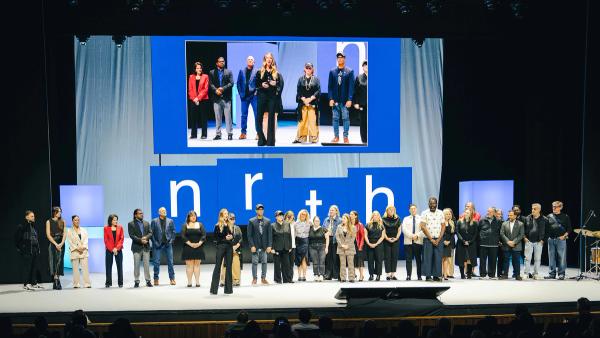
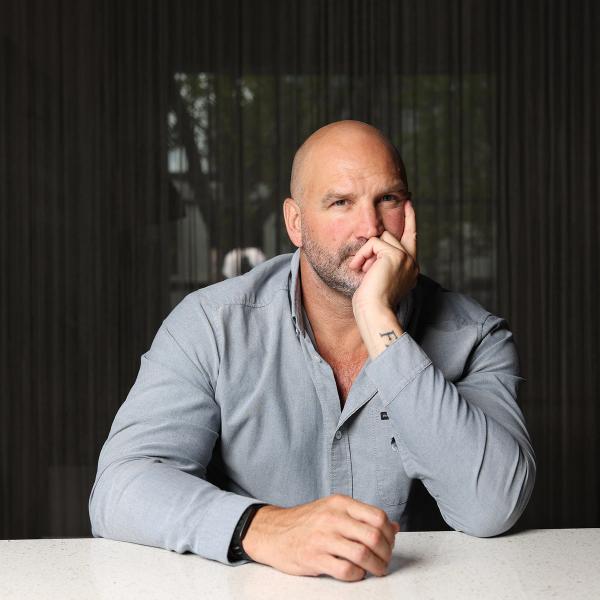
The muted atmosphere comes as a surprise. Carpeted. Darkly lit. Black furniture. No music. Workers padding about in sock feet.
This is not the predictable work environment for a group of twentysomething corporate neophytes who are carving a fast and, at least in their social media posts, noisy foray into the world of hockey stick manufacturing.
The quiet energy seems to suit Zech Thomas. The founder, leader and owner of Swift Hockey presents as soft-spoken, thoughtful. Yet an Instagram video shows him grinning like a kid as he attacks a competitor’s merch, snapping the shaft of a True Hockey stick against a brick-walled arena. A Swift supporter narrates: “go ahead, True. Block us. Hide from us. Do whatever you want. We’re still here, we’re still breaking your sticks and we’re not going anywhere.”
That’s one way to position Swift as an upstart maker of durable carbon fibre hockey sticks – pro level, insists the company – retailing at half the price of the big-name competition in a sport that slaps families with daunting expenses. “Our message is really simple,” Thomas says. “We want to make hockey more affordable, more accessible. We make pro-level sticks for everybody.” The so-far elusive goal: a stick for $100 or less.
Thomas launched Whitby, Ont.-based Swift in January 2023. Six months later, he was on Dragons’ Den, making a handshake deal with dragon Wes Hall to sell 20 per cent of the company for $70,000. After many months of par-for-the-course due diligence from Hall’s team, Thomas says he declined to proceed with the pledged investment. “I just said, ‘We don’t need you anymore.’” Swift’s revenues had ballooned, boosted in large measure by social content fed by the Dragons’ Den exposure. “Everyone thinks I left Dragons’ Den with a briefcase of money,” Thomas asserts. So he recorded a “what you didn’t see on TV” video to set the record straight. “The biggest thing [the show] gave us was certification. We are a certified brand in the community.”
Through a rapid-fire marketing strategy built almost exclusively on social media – the high price and break rate of sticks being a favoured video tactic to attack the likes of not only True, but also Bauer and CCM – Thomas and a small band of brothers have built Swift into what he says is a company with $2.5 million in revenues. At least this is certifiable: in December last year, Thomas was named by Forbes to its 2026 30 Under 30 list in the sports category, alongside Coco Gauff and Ilia Malinin. Oh, and Auston Matthews. His reaction? “Even if I didn’t make the 30 Under 30, I knew I was going to be on that list at one time. I was that confident.”
Thomas is 23.
The grand plan is to grow Swift from a hockey stick maker into a manufacturer of all-season sports equipment and ultimately – why not? – “the biggest sports brand in the world.” The market leader in sports equipment is Nike, a company with US$46 billion in revenues. The market leader in ice hockey equipment is Bauer, with slightly more than 50 per cent of the market. Then comes CCM. True holds slightly more than 10 per cent.

None of this is seen as a barrier by Thomas, who has manoeuvred around life’s obstacles with considerable skill.
There was thwarted ambition: his NHL dreams (defence, fast, playing style modelled on Erik Karlsson) drove him from house league in the hockey-crazed town of Oshawa, Ont., up the ranks through Triple A and on before dying at the minor pro level after spins being billeted at teams in Connecticut, Florida and Quebec. “My goal was to get, like, one NHL game,” he says. “That was the dream.”
There was fortitude: “it was a lot. Leaving my family at 15, 16…. Growing up, I was always an extremely quiet kid. Extremely shy.”
Thomas had to adapt. “I changed my personality. I changed everything about me during those times.”
Get our weekly newsletter – the people, places, and ideas revealing where Canada is headed.
There were the challenges of being Black in a sport that was making hard-to-notice progress in advancing diversity in the locker room. “I’ve probably heard it all,” he says of comments directed at him. “I’ve always had a really tough skin.” And then: “I don’t feel I got enough love playing hockey. I was in an organization where I scored the most goals, assists, led the team in points in every single category and I still didn’t get the year-end MVP.”
There were narrow academic prospects: strongest subject? Gym. And then? Health. “I was a horrible student in everything else. I barely passed. My brain was always everywhere, everywhere but that.”
And then there was COVID: “that really changed my perception on everything. I didn’t have hockey. I couldn’t train hockey. I really had to change everything.”
That bred resourcefulness: “I went and spent hours and hours and hours on YouTube on how to build a business.”
Thomas jumped on the pandemically perfect dropshipping bandwagon. Kitchen goods. Tech. Bracelets. Teddy bears. Girls’ clothing. He would create an online storefront for a line of goods, outsourcing procurement and shipping to a third-party supplier, relieving him of the challenges of stocking inventory. “I tried almost everything. Most of them failed,” he says before reaching for a more vivid description: “most of them went to garbage pretty quickly.”
One, however, succeeded. Thomas won’t provide details. “It was in the goods space.” What does that mean? “Toys, I would say toys, around that toys section.”
Within a year, he had sold the mystery company on Flippa for a sum, he says, somewhere in the low seven figures. He was 18. “Being 18 and having that lump sum of money…no one in my age group had that lump sum of money. I blew every single dollar…. I was living like an online superstar.”
Not solo, however. Since childhood, Thomas has kept close with two neighbourhood friends, Amari Sellars and Ryan Ellis, the kind of friends – more like younger brothers – who grew up playing endless hours of road hockey together and rode with Thomas through his early experiments in enterprise.
What do young entrepreneurs do with all that dough? Thomas starts to list the brand-new cars he purchased, getting as far as four BMWs – including an X7 – a Tesla Model X and a Cybertruck, acknowledging that auto values crash as soon as a car is driven off the lot. Watches: a Rolex, a Cartier, a Patek Philippe. An Audemars Piguet is barely visible on his left wrist. Ask him for the time and he retrieves his phone.
And Sellars? “Well, I couldn’t buy a car,” he says. “I wasn’t old enough to drive.” The trio took to eating at the Keg three times a day, which doesn’t seem possible. Sellars bought a Rolex.
Was there no guiding hand? “My parents saw what was going on, but they let it happen,” Thomas reflects. “They saw things were going downhill with all that money and they let it happen for learning, because if I didn’t do it then, I would do it later.” He expresses regret that he didn’t purchase something more meaningful. “It was definitely an eye-opening moment for us.
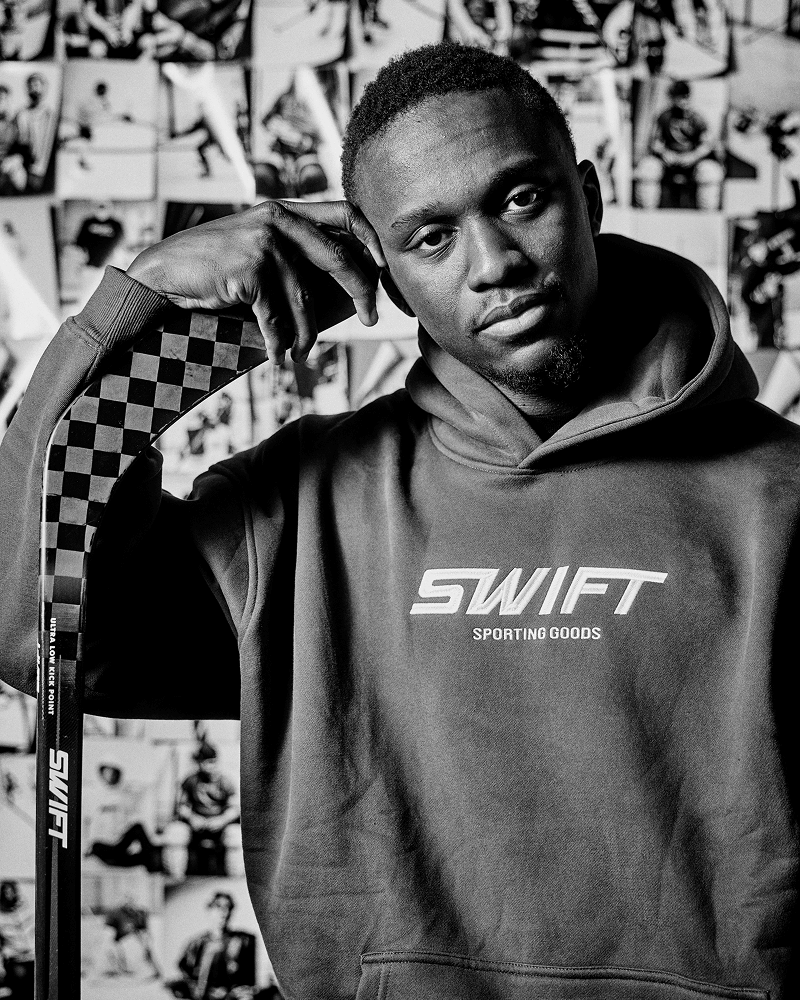
“I wasn’t completely empty,” he clarifies. What he did hang on to was $100,000, which he directed toward the development, initially at his father’s urging, of a hockey stick, a project he had been working on since his playing days. Thomas had been around the game long enough to see how financially exclusionary it can be. Surely there was a way to produce an affordable carbon fibre stick with a range of blades and flex points to choose from, just like the pros.
Sellars, too, had had hockey dreams, attending private school in Ontario to enhance his chances of breaking into collegiate hockey in the U.S. In 2023, he was drafted by the South Shore Kings and moved to Boston. That dovetailed with the launch of Swift. “I had to make the decision,” he says. “Chase my dream of Swift or chase my dreams of hockey? It took a lot of thinking but my goal was to make it with my friends rather than make it by myself.”
Sellars believes Swift is changing lives. “Growing up playing hockey, I’ve seen all my friends’ parents struggling to pay for the sport.” A recent market report by Mordor Intelligence notes that the financial challenge is more pronounced in the North American market, where fewer development supports compared with Europe and high costs create a ripple effect through the industry, limiting the growth of the player base as the large manufacturers rely on premium pricing to invest in product innovation. According to Mordor, annual participation costs in youth segments can reach $4,500.
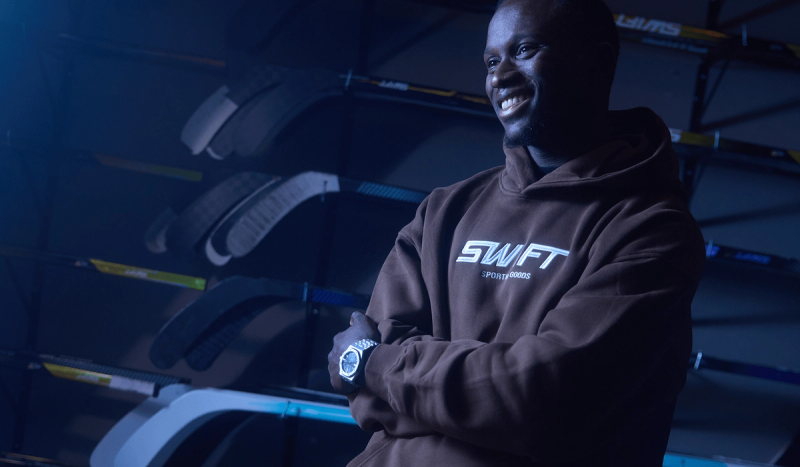
A top-line carbon fibre hockey stick is pricey. A senior Bauer Nexus Tracer is $400. A CCM JetSpeed FT8 Pro runs to $440. NHL-quality hockey sticks aren’t aimed at 12-year-old peewee players, but on Dragons’ Den Thomas said he was retailing his sticks for $150 and that a $400 stick would be the closest competitor. His made-in-China production cost is $68 per unit. The Swift ZT2 Pro senior stick today sells online for $249.99.
Is product comparison quantifiable? There’s no testing lab at Swift to help out with that. “The problem in the industry is that some – I’m not accusing Swift specifically – but clearly there are some that say this stick is as good as that stick,” says Graeme Roustan. “Not so. There are all kinds of different processes that go into making a carbon fibre top-tier stick that weighs 320 grams.”
This is Roustan’s game. The Canadian entrepreneur took Bauer to the No. 1 spot in the hockey equipment market – gloves, helmets, skates, sticks – before the company went public in 2011. Roustan exited the following year. Last November, he finalized his acquisition of True Hockey, after Swift’s provocative video showing a True stick snapping like a toothpick, in Swift’s language. Roustan can talk grades of carbon fibre. He did manufacturing deals in China. He’s dismayed by Swift’s style of promotion. “Look, I’m an entrepreneur. I support entrepreneurs. But I would love to see them release their numbers and prove some of the things they say.”
As for the True brand, the company couldn’t create any better advertising than goalie Connor Hellebuyck’s gold medal-winning save in the U.S.-Canada Olympic hockey game. Viewers couldn’t miss the True logo on that stick.
But Roustan and Thomas have one thing they agree on: hockey has a cost problem. “I’m laser-focused on making hockey more affordable,” says Roustan. True manufactures skates in Manitoba and goalie equipment in Quebec. Carbon fibre sticks are made offshore, but he’s zealous about growing True as a Canadian company and taking the brand to No. 1 as he did with Bauer. He’s looking at a five-year timeline, max.
The barriers to growth facing the pipsqueak Swift, as with any startup, are many. The Mordor study of the global hockey equipment market found that 70 per cent of consumers prefer offline retail – to feel the lightness and flex of a stick or assess the second-skin fit of a skate.
Swift has virtually no retail exposure. A couple of sticks can be found at the Legends store in Oshawa. At HockeyStickMan in Toronto – a hugely popular equipment emporium that specializes in “blackout” sticks that are logo-free and aim for professional quality – Swift is not on their radar.
As for the financial barrier to establishing professional player alliances, Swift is just breaking into product support in the Professional Women’s Hockey League, signing the Vancouver Goldeneyes’ Brianna Brooks in February and what they hope will be an NHL draft prospect in June.
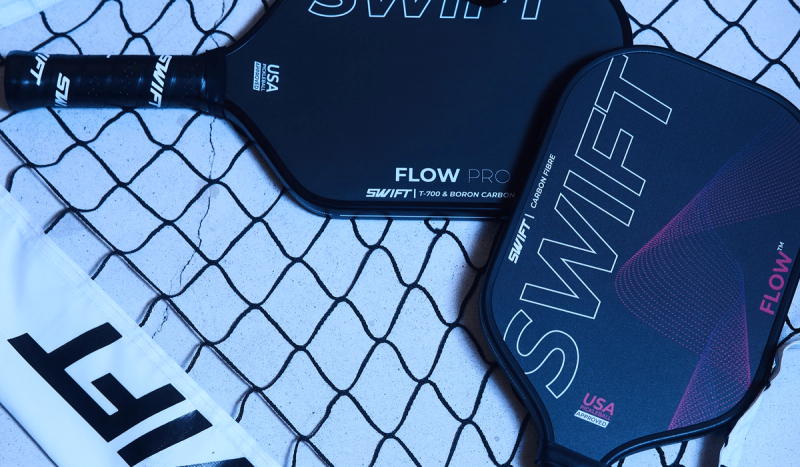
And as much as the company hopes for future deals with the likes of Canadian Tire, the more pressing concern is reliable delivery of inventory. Swift works with four manufacturers in China. “I think inventory is what’s holding us back from really making a run at some of these giants,” Thomas says, adding that he’s on the move into summer sports. First up: pickleball paddles.
Still, there’s an energy that perhaps the established players don’t quite get. If the company can hit its target of delivering a top-quality carbon fibre stick at under $100, consumers might be less concerned about the lack of retail exposure. “I think we’re doing something really powerful here,” says Sellars.
Certainly, they’re getting eyeballs. That video attacking a True stick had close to 7,000 views when Graeme Roustan was called to ask for his response. He had not seen the video. “I think they’re great at marketing. They’re pounding away on social media. But they’re not on the NHL ice surface so it doesn’t really matter. They’re not moving the needle. They’re just not. But good for them. I wish them all the best.”
Shortly after our conversation, Roustan emailed Thomas asking to see the video. It was, shall we say, swiftly taken down.
Get our weekly newsletter—the people, places, and ideas revealing where Canada is headed.