Canada’s bus shelters offer basic protection from rain and sun – and a reliable platform for advertising – but do little to temper the effect of extreme weather on transit riders. It’s not for lack of trying. For decades, designers developed new shapes, walls, windows and benches, promising greater comfort but typically delivering few tangible benefits.
They might’ve been looking in the wrong places. In Montreal, a pilot project by researchers from École de technologie supérieure (ÉTS) has transformed a pair of standard municipal bus shelters through an almost invisible intervention.
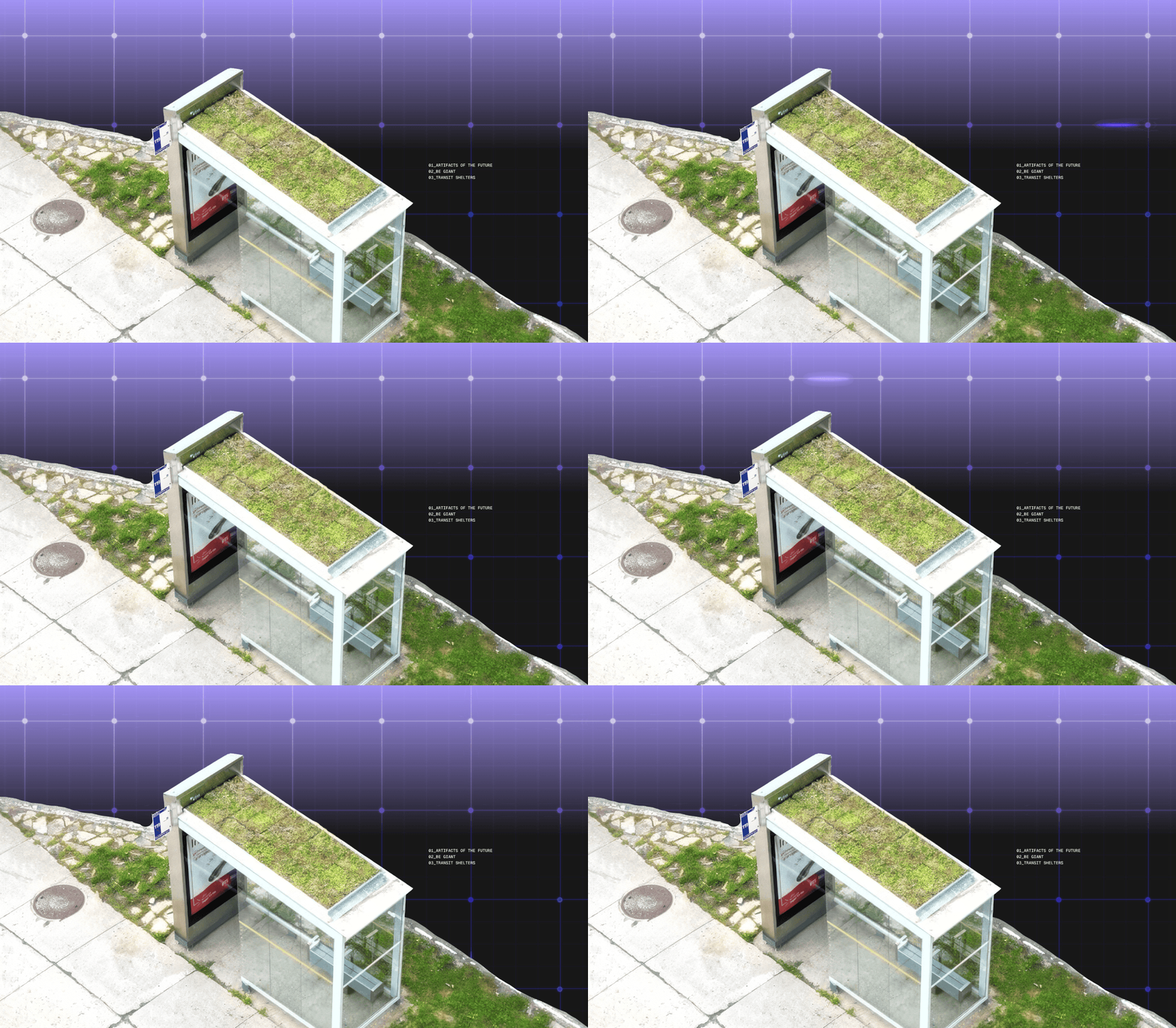
The secret? Beds of hardy greenery were added to the sloped roofs of two standard Montreal bus stops. Developed in collaboration with Quebecor’s outdoor advertising subsidiary Out-of-Home and local landscapers Les Toits Vertige, the augmented shelters sit at the downtown intersection of Robert-Bourassa Boulevard and Saint-Jacques Street, and on Sherbrooke Street East in the Hochelaga-Maisonneuve neighbourhood, within a stone’s throw of the city’s iconic Olympic Stadium.
From a distance, the simple shelters are accented by a jolt of plant life, animating the urban realm with red and green hues of flowering sedum, a hardy plant well suited for extreme weather. For transit riders, the greenery acts as natural insulation, helping to moderate temperatures. The effect is particularly notable at the peak of the summer heat.
“On average, the green roof has the potential to reduce the temperature by about 2.9 C above the roof and by approximately 1.4 C inside the shelter,” notes the ÉTS research team. Since the green roofs were installed in August 2024, the indoor and outdoor temperatures have been closely monitored.
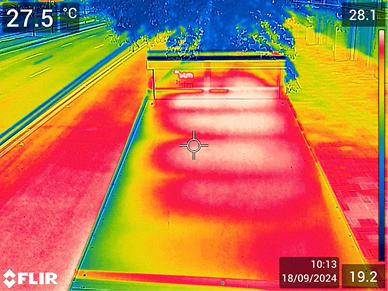
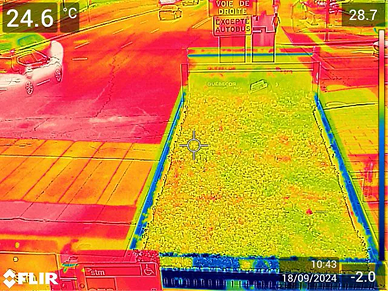
One sweltering day in September, “the temperature outside the shelter reached 36 C, while it was measured at 33 C inside,” notes the ÉTS team. That’s a significant improvement in comfort at low cost, particularly given the simplicity of the installations, which are similar to sedum planters found at Home Depot.
They each measure just over four square metres and offer passive benefits similar to the much larger green roofs that increasingly top new buildings. The thirsty yet durable plants absorb stormwater, too, easing the strain on civic infrastructure. Moreover, the rich sedum offers a habitat for various insects and birds and pollinators, supporting urban biodiversity while potentially helping to extend the lifespan of the roof structure below.
As the two-year pilot project nears its conclusion, the promising results make a compelling case for citywide expansion.
“Our objective would certainly be to see this type of installation expanded more broadly across the city,” says Les Toits Vertige vice-president Vincent Staub, adding that the team is working to develop proposals for a broader municipal rollout following the pilot.
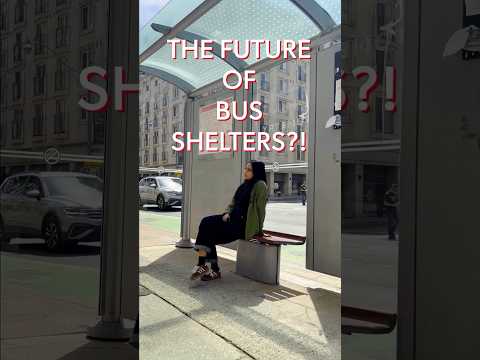
Montreal green bus shelters are a welcome Canadian innovation, though similar installations are common in parts of Europe and Asia. In the Netherlands, more than 1,000 green roofs now top urban bus stops across the country, with similar designs quickly gaining popularity in Japan and Singapore. In cities across the United Kingdom, the Living Roofs project saw bus stops outfitted with greenery that specifically serves endangered bees and pollinators. South of the U.S. border, Boston now boasts the largest collection of green bus stops in the United States, with more than 30 shelters outfitted with green roofs; similar projects are planned in New York, Virginia and Maryland.
It may all seem like a drop in the bucket, but it can scale up to a meaningful impact. According to municipal officials in Boston, greening all 8,000 of the city’s bus stops would contribute nearly seven hectares of new green space, roughly equivalent to 13 American football fields.
It’s a metric that puts our cities at a disadvantage – Canadian football fields are wider and longer than their American counterparts. Fortunately, Canadian municipalities also enjoy higher per-capita transit ridership than their southern neighbours, with cities like Montreal, Toronto, Edmonton, Vancouver and Brampton consistently recording some of the highest rates of bus ridership in North America. That adds up to tens of thousands of bus stops, each a potential pocket of urban greenery that could make the morning commute a bit more comfortable.