To understand Canada’s race to space, it helps to look out to sea.
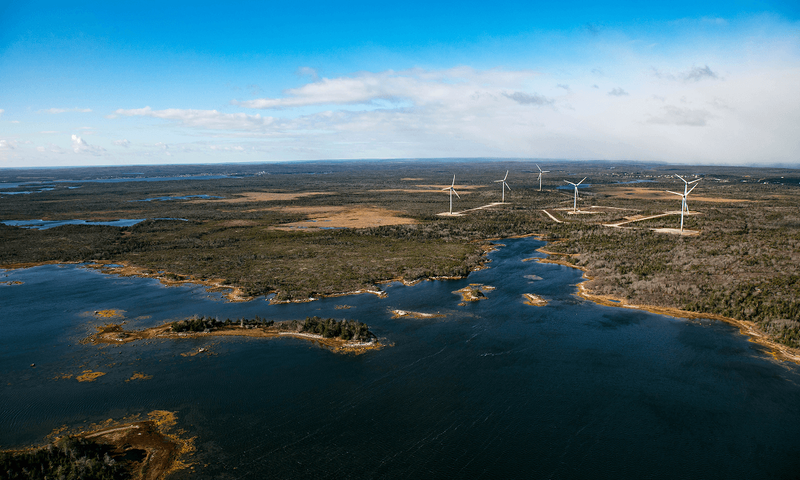
Standing on the wind-whipped wharf in Canso, N.S., nothing but the icy blue-grey ripples of the North Atlantic Ocean extend out from this rocky outcrop on the northeastern tip of mainland Nova Scotia.
This view is why propulsion engineer-turned-entrepreneur Stephen Matier knew his search for a rocket launch site was over when he first visited this small fishing community in 2016.
“When people here say, ‘It’s not the end of the Earth, but you can see it from there,’ that’s exactly why it works,” says Matier, founder and CEO of Maritime Launch Services, which is building Canada’s version of Cape Canaveral on a 136-hectare swath of Crown land at the mouth of Chedabucto Bay. Construction on Spaceport Nova Scotia is underway, with its first commercial orbital launch planned for late 2027, building on two successful suborbital test flights in 2023 and 2025.
“We needed wide-open ocean and the right geography. Canso has both.”
Fast-forward a decade from that first visit and Canada’s self-interest has caught up to Matier’s business case. An unpredictable American administration, rising global tensions and middle-power shared security needs have moved what’s called “sovereign launch capacity” from an interesting long-term bet to critical infrastructure that Canada can’t afford not to build.
In March, the federal government announced a landmark $200-million agreement to make Spaceport Nova Scotia Canada’s sovereign launch site for National Defence, leasing a dedicated launch pad at the Canso-area facility for 10 years. That pad, one of four planned for the site, should be operationally ready late this year.
“It’s really about access to orbit. That’s the real key piece that we as Canadians need,” says Matier, noting an estimated quarter of Canada’s economy is dependent on space-based technology. “Whether it’s your ATM, your cell phone or in so many things, we’re irrevocably hitched to space, to low Earth orbit.”
Get our weekly newsletter – the people, places, and ideas revealing where Canada is headed.
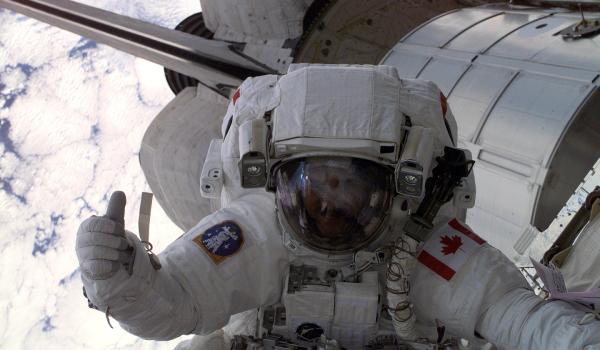
And so, for the first time since Canada joined the space age in the 1960s, the question of who gets to put Canadian hardware into orbit, on whose terms and from where, is being answered. While Canada has long built its own satellites and been active in space, from building the Canadarm to supplying NASA with astronauts – Jeremy Hansen on the Artemis II round-the-moon mission is just the latest. But the country has never actively pursued building the infrastructure to launch payloads and people into space on its own until now. To do that, Canada needs to make its own rockets and build spaceports to launch them. Spaceport Nova Scotia will be the first. It’s turning Atlantic Canada into the place where the country’s space ambitions literally take flight.
The term spaceport may sound futuristic – think Star Wars’ Mos Eisley – but its purpose is anchored in the centuries-old tradition of seafaring. Ports provide safe harbours for vessels to load and unload cargo and passengers, sheltered from storms. And they’re critical for the trade and commerce that build a nation.
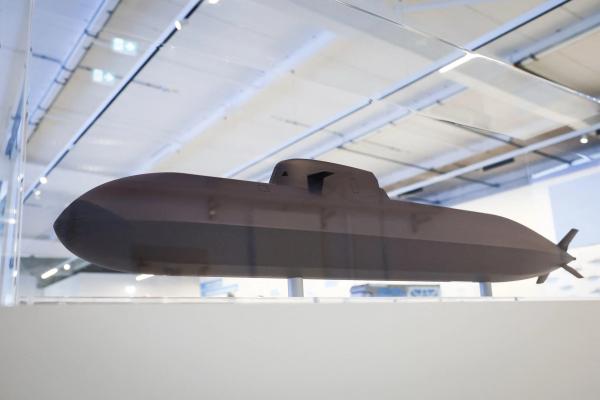
After seaports came airports and, since the 1960s, more than a dozen countries have built spaceports to rocket to the stars (or at least into low Earth orbit). Kazakhstan has the world’s oldest operating spaceport, but China, Russia and Iran are all in the game, as are all of Canada’s G7 peers except, for the moment, Germany, which is building its first on a platform in the North Sea.
Spaceports do more than ignite our imaginations about space exploration; they give countries control of how and where they can access space. Canadian government agencies and businesses have been depending on other players, like Elon Musk’s SpaceX with its Falcon 9 rockets, or France’s Arianespace, to get their hardware into orbit.
This dependence is a problem in a world increasingly reliant on orbiting satellites for communications, navigation, business transactions, weather monitoring, scientific research, surveillance and more. Canada’s lack of launch capacity undermines core elements of sovereignty: control over national security and Arctic/coastal surveillance; assured access to and protection of critical digital infrastructure and financial systems; and the freedom to set and execute Canada’s own strategic, scientific and economic priorities in space.
That will change once rockets start taking off from Canso. According to Matier, Spaceport Nova Scotia won’t look much like the sprawling American complexes Canadians know from films and the live launches of the past.
“The spaceport of today has changed so much. We have launch vehicles now that are basically fully containerized, that can come from their home ports, show up with six or seven tractor trailers, unpack and launch in 72 hours,” he says. “We’ll have multiple control centres inside our launch control centre with different bays for different rocket launch clients and nice, small, compact teams.”
Ginny Boudreau, a lifelong Canso resident and executive director of the Guysborough County Inshore Fishermen’s Association, says she’s eager to see rockets carrying Canadian satellites launch just over the hill from her paper-strewn office near the wharf.
“We use all kinds of technology that the majority of Canadians don’t have a clue about,” she says, citing hyper-accurate weather forecasting, trap geolocation, water temperature monitoring and sea floor mapping as some of the satellite-dependent technologies that keep Nova Scotia’s $2-billion fishing industry safe and operational.
Running a fishing boat in 2026 is its own form of specialized technical expertise. “I guarantee you, when we say we don’t know anything about rocket science, rocket science doesn’t know a damn thing about the fisheries,” she says.
The lobster traps and colourful buoys that tourism brochures offer as examples of East Coast living belie the high-tech requirements of Canada’s fisheries, as well as other resource industries like mining, forestry and agriculture that Canada is now so keen to develop to boost the economy and lessen trade dependence on the United States. Launching Canadian-controlled satellites from Canadian sites would provide greater capabilities and security for Canadian industries, linking economic and sovereign resilience, from the depths of space to the depths of the sea.
It would also provide greater safety and security to Canadian resource workers and companies. “We are at risk from the time we step on the wharf,” says Boudreau, who represents 140 enterprises fishing everything from snow crab and lobster to tuna and herring in an area that stretches out past Sable Island to the 200-mile limit, the demarcation line between Canada’s declared sovereign waters and the open ocean.
“Let’s say I have a two-day window to go fishing and I know on day three or four I need to be back in port because I’m going to have a load on and the wind is not going to be on my ass, pardon my language,” she says, leaning forward and pointing her finger for emphasis. “What are the chances of me returning to port safely for myself, my crew and my vessel and in a timely manner that gets my best product to shore? I need weather predicted as far out as they can, and the confidence level needs to be there because that’s not a chance I’m willing to take at Sable [Island] on a 45-foot boat with 60,000 pounds on board.”
Maritime Launch’s Matier wants to give Boudreau the assurance she seeks; that the satellites guiding Canadian fishers home through North Atlantic storms are launched from, and answer to, Canada. From his office on Halifax’s historic waterfront, Matier is turning that quiet demand from the wharf into a national argument for sovereign launch.
“This last year, it’s really turned into something much more higher purpose, a higher calling, where sovereign launch has become super important for sovereign Earth observations, sovereign AI, for anything we want to launch.”
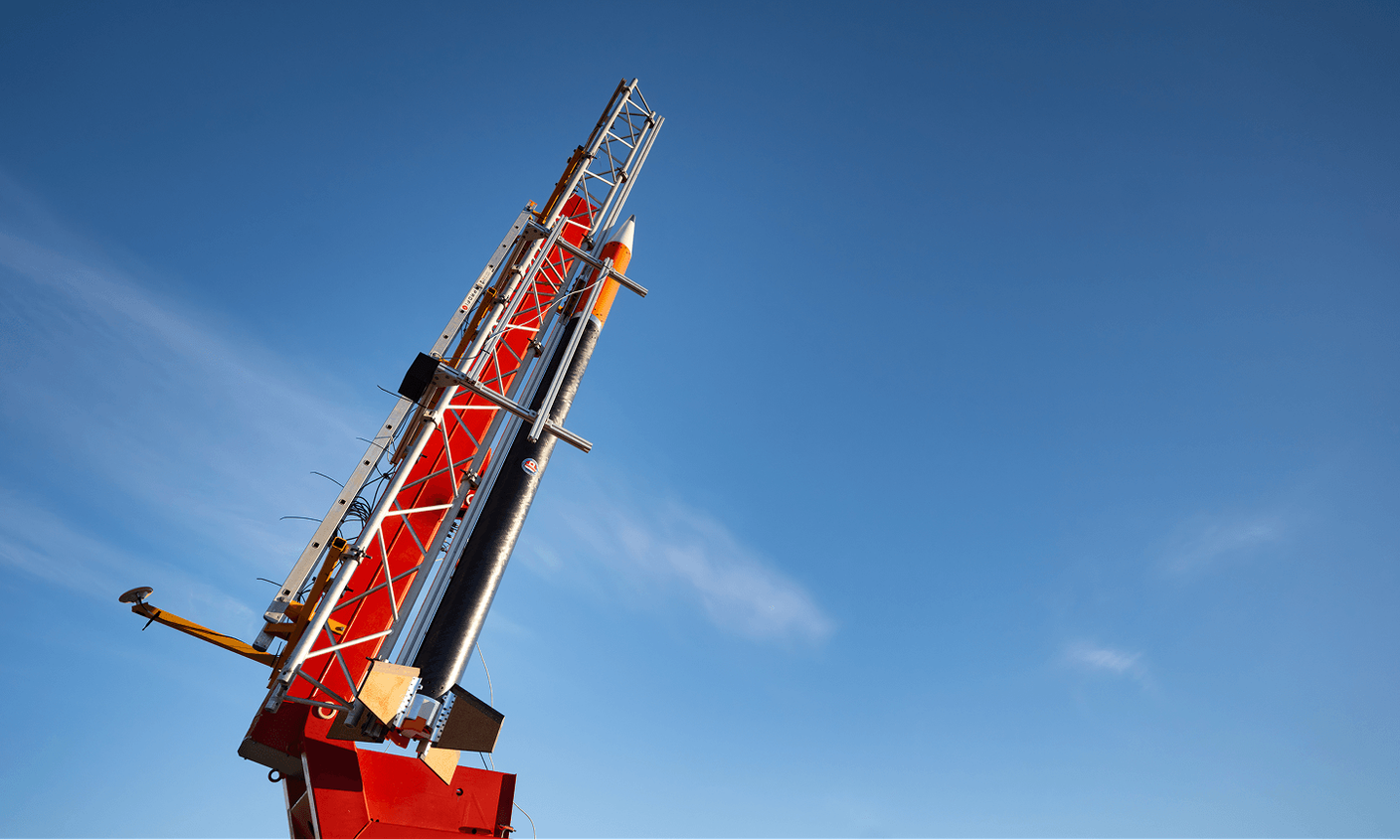
Matier wasn’t aiming quite that high when he first visited Canada’s Ocean Playground. A longtime NASA contractor on the space shuttle program, he watched the last shuttle land in July 2011 and saw an opening for a new, private-sector market. Commercial satellites and commercial rockets were everywhere, but launch remained limited to government-owned sites.
“To be fully commercial, the market needed commercial launch sites,” he says. “You need a rocket big enough, and a spaceport in the right place. Joining those two is what this initiative is about.”
His rocket of choice was initially a Ukrainian one. In 2015, Matier was hired by colleagues in Dnipro, Ukraine, home to the Yuzhnoye State Design Office, which has played a key role in first Soviet and then Ukrainian rocket technology since 1958. After a launch initiative with Brazil fell through, the Ukrainians went looking for a North American site for their Cyclone-4M rocket, to be closer to commercial satellite manufacturing hubs. Matier evaluated a dozen potential sites across the continent, including Canso, which stood out for its access to key orbits – including the International Space Station – excellent public safety because of the open ocean, and nearby infrastructure and transportation links.
“From a connectivity standpoint, we have the Trans-Canada Highway, national rail, Halifax [Stanfield] International Airport with hangar space, the Port of Halifax and the port of Hawkesbury close to site,” Matier says, adding that the Canadian Navy’s Maritime Forces Atlantic is based in Halifax.
“It’s definitely not just Canso. We’re plugging a rural launch site into a North American logistics network.”
That network would also include NATO’s Starlift program, which is co-ordinating launch systems to meet its requirements across NATO’s 16 member states and needs a backup for the hurricane-prone American launch sites in Florida. Matier says a spaceport on Nova Scotia’s cooler, rockier shore fits the bill. “Having a Canadian site further north that can keep flying is in everybody’s interest,” he says.
Spaceport Nova Scotia is being built to a standard that could one day carry astronauts and space tourists, but Matier is clear the current focus is on uncrewed rockets and satellites.
Moving from idea to implementation has included a decade-long gauntlet of geopolitical shocks and Canadian caution as regulators struggled to keep up. Donald Trump’s constant linking of Ukraine to corruption during his first term made investors skittish. Then came COVID, followed by Russia’s invasion of Ukraine. Matier widened the Canso project’s focus from contract launch pad for the Ukraine into Canada’s first sovereign spaceport serving both commercial and defence interests.
In the past year, Maritime Launch has signed agreements with several international launch providers, including the U.K.’s Skyrora, the Netherlands-based T-Minus Engineering and South Korea’s INNOSPACE, to bring their launch systems to Spaceport Nova Scotia and expand the site’s multi-provider capabilities.
Closer to home – Matier, his wife, two kids, five cats and a dog relocated to Halifax from the U.S. in 2018 – the transplanted rocket engineer cycled through two provincial and three federal elections, meeting with a succession of cabinet ministers and senior staff.
“We went through hard times,” he says. “We’ve been saying for 10 years that Canada needs its own launch capacity. Only recently has the light bulb gone on.”
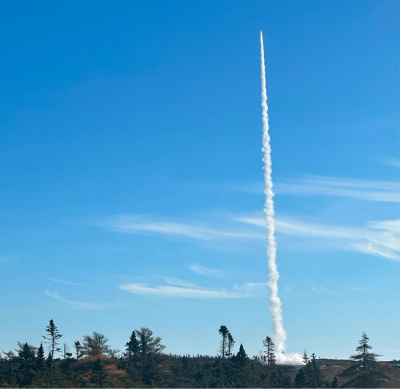
In its last budget, the federal government committed to spending $182.6 million over the next three years to build sovereign space launch capability, a defence-led move to secure Canadian communications, navigation and Arctic surveillance. Its new Defence Industrial Strategy elevates sovereign space launch to a core national capability, framing independent access to orbit as essential to Canada’s strategic autonomy.
It took the federal government half a century to get here. In 1967, as Canada celebrated its centennial year, satellite pioneer John H. Chapman, for whom the Canadian Space Agency headquarters in Ottawa is named, wrote a federal white paper outlining a vision for Canada’s role in space. “In the second century of Confederation, the fabric of Canadian society will be held together by strands in space,” he wrote, “just as strongly as railway and telegraphy held together the scattered provinces in the last century.”
He offered three key recommendations: create a national space agency; bolster domestic telecom capability; and build sovereign launch capacity to put hardware in orbit. The federal government followed through on the first two – Canada became a pioneer in satellites – but it never built or launched its own rockets.
Investment has followed the shift in government priorities. In October 2025, Export Development Canada provided Maritime Launch with a $10-million loan to help finance the spaceport build. The following month, MDA Space Ltd. announced a $10-million equity investment and a plan for it to become an operational partner at Spaceport Nova Scotia to support its development and future operations. MDA, now based in Brampton, Ont., after being bought by Canadian investors in 2020 and repatriated from the U.S., is Canada’s largest space tech company, and the home of the Canadarm.
That new relationship brought Melissa Quinn to Maritime Launch as its new vice-president, spaceport operations, a secondment from her executive position with MDA Space. She is the previous head of Spaceport Cornwall, where she oversaw the U.K.’s first spaceport licence and orbital launch attempt.
Rocket builder Reaction Dynamics, based in Montreal, has also taken an equity investment in Maritime Launch and will attempt its first orbital launch from Spaceport Nova Scotia under an exclusive launch pad arrangement. Maritime Launch expects to be doing regular commercial launches in 2027, directed from the nearby flight control centre.
If Maritime Launch is focused on developing Canada’s launch capabilities and building a new space economy in rural Nova Scotia, Toronto-based entrepreneur Rahul Goel wants to control the full value chain by linking Ontario tech with Newfoundland geography.
About 250 nautical miles (624 kilometres) northeast of Canso, straight across the North Atlantic Ocean in the mining and fishing community of St. Lawrence on Newfoundland’s Burin Peninsula, Goel’s company NordSpace is building a smaller spaceport.
It’s part of Goel’s vision to create a vertically integrated space company to offer complete mission solutions, which includes building satellites, rockets and a spaceport, a model similar to SpaceX and New Zealand’s Rocket Lab.
It’s an agenda Goel has pursued in a roundabout fashion since graduating from the University of Toronto with a degree in aeronautics engineering in 2016, the same year Matier landed in Canso.
Like Matier, Goel faced a similar problem: a risk-averse Canadian investment community and slow-moving government innovation policy and practice. “I graduated from my undergraduate studies and that was the moment where I was ‘All right, let’s go, let’s build space hardware in Canada, let’s build launch,’” says Goel. “But ultimately, Canadian culture is still Canadian culture, and I would say this in a critical way. I’m born and raised here, but it’s just very risk averse, very slow.”
This has been particularly true for, well, rocket science.
“It doesn’t take a lot of money to build a spaceport… but if you’re building a rocket, it literally from day one takes millions of dollars and people with a very interesting level of comfort with seeing their cash literally set on fire.”
Rather than spend years chasing grants or small venture capital rounds, Goel decided to bootstrap his entrepreneurial aspirations. To begin with, he started a software business with the intent of generating cash he could invest in his space dreams. He still owns that company, an event-management software platform called PheedLoop, which spins profits into his new venture alongside what he foresees as “significant public capital that will be going into a company like this.”
Much of that investment will be focused in Markham, Ont., the home base of NordSpace’s manufacturing facilities and lab, located in a commercial park just south of the old Buttonville airport, where thousands of commercial pilots learned to fly.
Now, engineers are figuring out how to take flight the 21st-century way, with 3D printing and artificial intelligence. NordSpace is in hiring mode, planning to increase its current number of engineers from 20 to 50 this year. They will work with AI agents that generate and refine computer-aided design models and use metal 3D printers for satellite and rocket parts. “It’s allowed us to start building hardware at the speed of software,” says Goel.
For instance, NordSpace’s satellites are designed to process data in orbit rather than dumping everything back to Earth. Each satellite carries an Nvidia GPU (or graphics processing unit) running a dedicated AI system on board. Ground controllers can essentially “prompt” the satellite, asking it to watch for wildfires over a specific area, for example, and the AI is programmed to interpret that request, scan what it sees and only send down information when it detects something relevant.
With Markham as its factory floor, St. Lawrence is where NordSpace’s hardware will take off. The company plans to build the Atlantic Spaceport Complex on 37 hectares of Crown land located at Sauker Head, across the harbour from the local fluorspar mine. Goel likens it to a regional airport: a modest, two-pad facility that gives NordSpace’s Canadian-built hardware a clear corridor over the Atlantic Ocean.
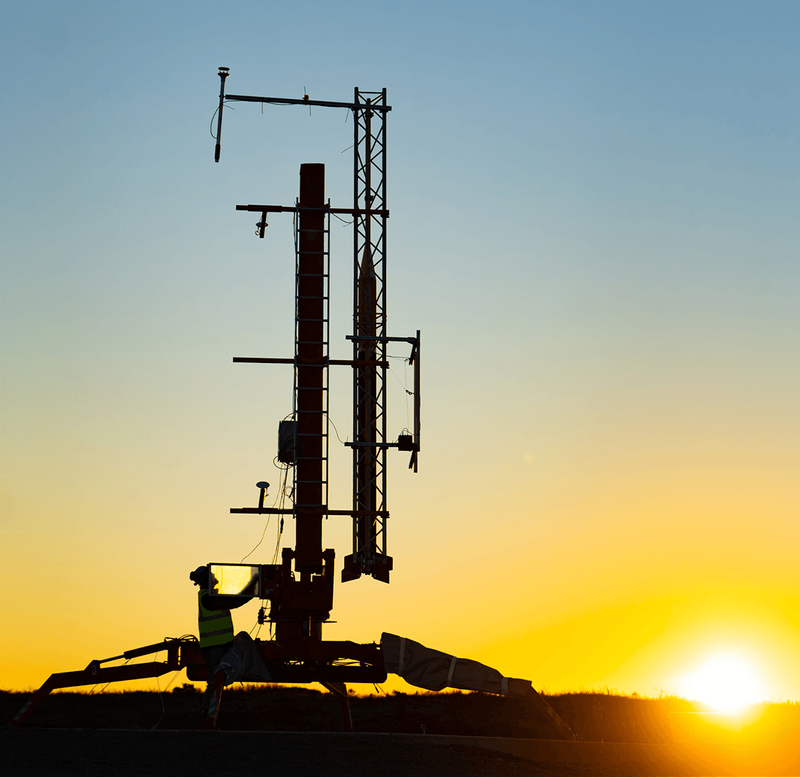
NordSpace is in testing mode, having made several unsuccessful attempts to launch its Taiga rocket in late summer and early fall 2025. The company plans to return to the pad for new test launches this spring. That’s when construction will begin, following the December 2025 decision by provincial Environment Minister Chris Tibbs to release the company from further environmental assessment.
In a decade’s time, Goel hopes NordSpace will launch not only its own rockets, but Canadian-built satellite constellations to connect northern communities, domestically controlled navigation systems and robotic probes bound for the Moon and Venus. But the legacy he talks about most isn’t any particular piece of hardware.
“I want to get to a point where everybody in Canada can say we won, we did this, we built our own rockets,” he says. “We became a major source of jobs. We domesticated a lot of manufacturing, and many members of the original NordSpace team have left and started their own companies because they saw what building a company is like and they thought they could do it themselves and create more jobs.”
Kevin Pittman hopes Goel and NordSpace can deliver on their promises. The former school principal-turned-mayor of St. Lawrence is, like Boudreau and the residents of Canso, accustomed to big ideas being pitched to rejuvenate small places.
The town’s roots are as a fishing settlement that swung hard into mining when Alcan opened a fluorspar operation in the 1930s. At its peak in the 1950s and ’60s, there were about 3,000 residents; then Alcan pulled out and today it’s down to 1,100. After a couple of failed attempts to restart the mine, Canada Fluorspar Inc. is now giving it a go. Fittingly, fluorspar is considered a critical mineral for technology, defence and the aerospace industry, where it is used in the production of satellite and rocket components.
The town’s boom-and-bust history explains why Pittman’s reaction to an email from Goel pitching the spaceport was simple disbelief. “My first initial [reaction] was, what? My second one was, why us?” Pittman says. “This is like, ‘Oh, they’ll be here today. They’ll be gone tomorrow.’” However, he appreciated the time Goel and NordSpace’s director of operations spent visiting St. Lawrence to hold community meetings, brief the local council and loop in the local fire department on safety plans.
“I would say Rahul’s passion, just his passion, sells people,” he says.
Back in Halifax, Sarah McLean, Maritime Launch’s vice-president of communications and corporate affairs, spends a lot of her time translating her company’s vision for a Canadian spaceport into something that skeptical fishers, small-town mayors and federal policymakers can have faith in.
“The local example to point to is the shipyard here in Halifax,” she says, pointing out the window toward Halifax Harbour. “There’s the shipyard itself, but there’s also an ecosystem around that shipyard. That’s the really exciting opportunity.” Spaceport Nova Scotia would do the same, she says: “There’ll be satellite manufacturers and developers coming to town. That ecosystem around the spaceport is what’s really exciting.”
What began as an improbable plan to launch a Ukrainian rocket from Canada’s eastern edge has become something larger: an attempt to plug rural Atlantic Canada into a global space network and a way to make Canada master of its own ambitions in space. And securing Canada’s sovereignty will be the work, in part, of the coastal communities of Canso and St. Lawrence, and the entrepreneurs who see Canada’s future in the stars.