They’re known as MANGO – Microsoft, Anthropic, Nvidia, Google DeepMind and OpenAI – the quintet of American AI giants currently scouring the globe for talent. Canada has become one of their favourite hunting grounds, and why not? Thanks to our pioneering scientists, universities and research institutes, we have, by some estimates, the highest concentration of AI talent in the world.
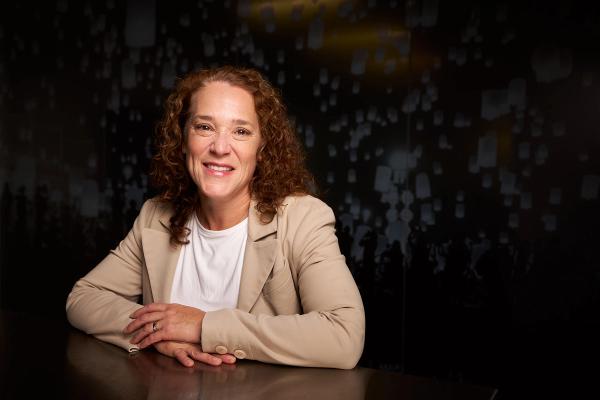
This puts Canadian companies up against U.S. behemoths known to court top talent with everything from seven-figure salaries to poker games with Silicon Valley titans. It’s a challenge that fires up Judy Liang every day. As Senior Director of People Operations at the Toronto-headquartered AI customer-experience scaleup Ada, it’s her job to bring bright new prospects into the fold – and she’s been busy. Last year alone, her team hired 125 people, bringing the 10-year-old company’s total tally of owners (the preferred name for Ada staffers, since each holds equity in the business) to nearly 300.
Be Giant sat down with Liang to discuss the cutthroat AI job market, how Canadian employers stack up, and Ada’s surprisingly analogue approach to recruiting humans in the age of bots.
Q: You’ve been recruiting in tech for more than a decade – enough time to see some ebbs and flows, including the rise of the so-called MANGO companies. How would you characterize the current AI talent landscape?
A: It’s probably more dynamic than ever right now. We’re seeing new types of talent profiles in the market: people who are true AI experts, for example, or people who are invested in how AI is involved with software development.
The landscape has completely changed in terms of the speed at which we get talent and fight with other competitors for it. We could be talking to a candidate for a software engineer job, and they’ll be off the market in a couple of days.
It’s a direct competition: you don’t always know who you’re fighting with, but what you do know for sure is a lot of software engineers have at least three to four other offers right now.
Q: What do you think is behind the current frenzy?
A: To me, it makes sense because Canada has become such a strong hub for both software development and AI adoption. We have so many great candidates with strong research backgrounds, and they’re coming out of world-class institutions. Canada really is a place where we’re seeing top-tier talent.

Q: What does this mean in terms of candidate expectations? Are our best and brightest demanding the champagne and caviar treatment?
A: Candidates are demanding more and more because they can. They have the skills and talent to ask for a lot, so compensation has gotten more competitive over the past year or two. Equity is especially important. Candidates want to have a stake in the companies they work for.
We’re also seeing people ask for very specific things, right from the start: what’s the promotion path? Will they be able to showcase their usage of AI? How fast will they be able to improve our product? How can they structure a bonus that will match what they bring to the company?
Today’s AI workforce is also really curious. They want to be able to learn outside of work. Because of that, candidates are asking for a lot of learning and development dollars so that they can continue their personal growth outside of work: courses, AI conferences, things like that.
Candidates will say, “This company is offering this amount of learning and development dollars, how much is Ada offering?” or “This other company is launching all these AI tools internally. What does Ada have that I can use and play with to expand my skills and experiences?”
Q: Big tech companies have developed a reputation for offering extreme lifestyle benefits: nap pods, chef-run cafeterias and the like. Do perks like these matter to candidates in this moment?
A: The value has definitely shifted. Perks used to be a differentiator. Now they're more of a hygiene factor. Top AI talent today asks harder questions: what will I be building? Who will I be learning from? What is this company’s trajectory? A ping-pong table or a pet-sitting stipend doesn’t move the needle on any of those.
That said, perks aren’t irrelevant. When compensation and the work itself are competitive, a thoughtful perks package signals something about how a company thinks about its people. It’s less “this will get them to sign” and more “this confirms they made the right choice.”
Q: Does Canada’s much-celebrated AI ecosystem – our universities, institutions, startups, etc. – matter to candidates?
A: Absolutely. When candidates are in a job search, it’s about the community. So they’re not just looking at Ada, but also at who we are affiliated with. That can include neighbouring companies that are similar to us, and do similar things.
The average tenure for someone in tech could be two to three years, if not less. People are curious, and they want to be put into the unknown, which can mean a new environment or a new team that will allow them to push themselves the most.
Q: How is all of this affecting your recruiting strategy at Ada?
A: We’re not casting a wide net and hoping to see what kind of candidates we get. We focus all of our searches on finding people who are truly passionate about what we do – people who really believe in the future of AI.
So we go beyond traditional recruiting approaches. Great candidates are everywhere across Canada, so we go out into the community to find them. We frequently host events at our office in Toronto, where different interest groups come together to talk about AI, or do demos of what they’ve built. We sponsor events like Toronto Tech Week. We get out there and network in the community instead of waiting for people to come to us.
Q: Some people might find it surprising that an AI-based company leans so hard on connecting face-to-face.
A: I think you get the best results when human connection intersects with technology. You can’t rely on too much of one or the other.

Q: Is there an element of patriotism at play here? Does homegrown talent want to work for a Canadian company?
A: I do think being Canadian has worked in our company’s favour. There’s a real sense of pride and urgency right now. Canadian talent wants to build something meaningful here, not just export their skills elsewhere. Ada sits at the centre of that. We’re one of Canada's leading AI companies, and candidates increasingly see joining Ada as a way to shape what Canadian AI looks like on the world stage. That’s a powerful pull.
Also, people are drawn to the values they associate with Canadian companies right now.
Q: Such as?
A: A few things come up consistently. There’s a humility to Canadian companies. We tend to build from first principles – from actually understanding the problem – rather than from hype. Candidates also talk about a strong association with long-term thinking over short-term extraction: building something durable rather than just optimizing for the next quarter.
And increasingly, candidates mention ethical grounding: a sense that Canadian companies are more likely to ask “should we?” alongside “can we?” when it comes to AI.
Q: What’s your approach to finding candidates beyond Canada’s borders?
A: We’ve made a real effort to expand our footprint globally. We’re now operating in 11 different countries. Most work remotely, but not all. In the last two years, we’ve had a lot more interest from candidates who are based in the U.S. and other countries because they really want the quality of life that they would receive in Canada. We’ve recently had employees decide to relocate from the U.K. and Ireland to work for Ada here [in Toronto], for example.
Q: How does Ada’s Canadian base play among international prospects?
A: On a practical level, the immigration process for Canada is relatively easier, compared to our neighbour in the U.S. That’s worked in our favour.
Beyond that, we’ve had international candidates tell us that they really believe in the work that we’re doing here. That makes me really proud. We have a good employer brand globally right now.
Q: What is it about that brand that seems to be registering with folks?
A: First, we offer a lot of things that people want, like our ownership model: the moment an employee walks through our virtual doors, they have an equity stake in the company. That is a big selling feature.
Our culture and collaboration model is also appealing. One of the fastest ways to lose candidates today is to tell them they have to come into the office five days a week, so we are remote-first. But employees have the option to come in to our office in downtown Toronto, or to any co-working space near them, if they need a change of pace and environment.
Beyond that, as a company, we are in that sweet spot where we’re not starting from scratch, but at the same time, our people are not cogs in a large machine. Everything they do matters, and every decision they make contributes to the future of the company. People really value that mix of autonomy and impact right now.
Q: Let’s wrap up with an exercise: say I’m a top AI prospect, and we meet in the elevator after one of those networking events you mentioned earlier. I probably have plenty of career options. What’s your pitch to get me to consider working for a Canadian company like Ada?
A: Ada is a place for you to grow, and we will support you in that growth. We’re not just talking about AI – we have hands-on experience with it and are at the leading edge of adopting the tools that are making the biggest changes today. Every person at this company is responsible for helping to make the decisions that shape how customer experience will be experienced in the future. What you do with us will matter so much. We’re going to be making history here. And there cannot be a more exciting time than now to be part of a Canadian company that is at the forefront of AI and technology.
This interview has been condensed and edited.