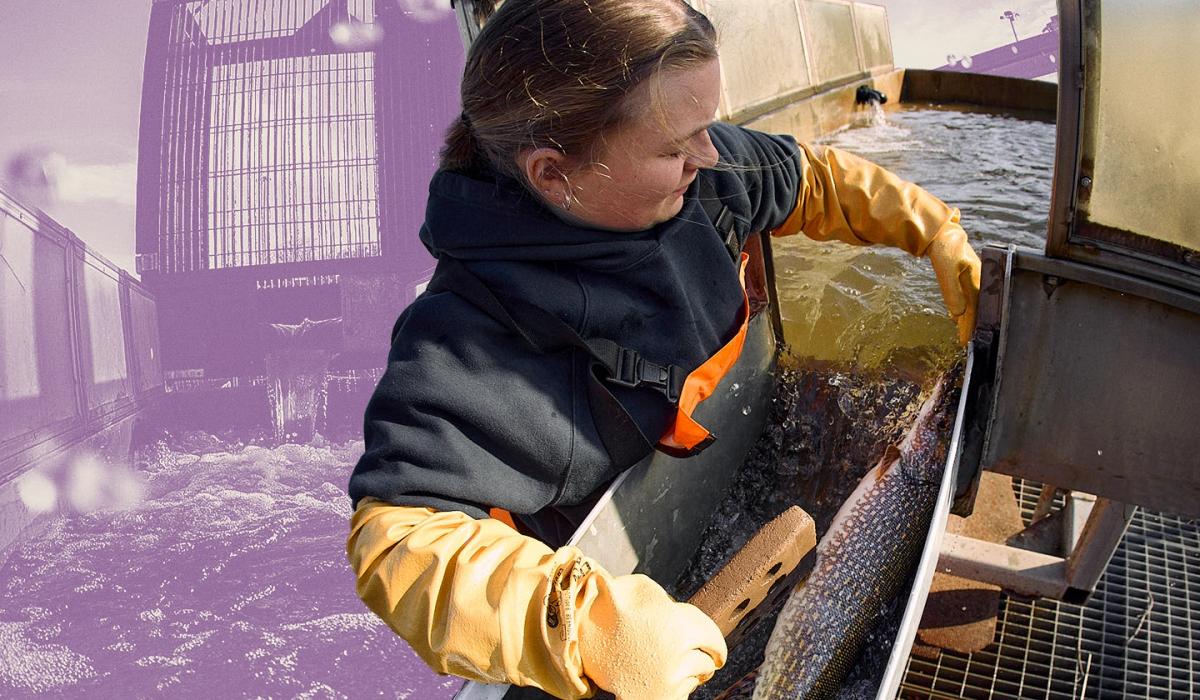
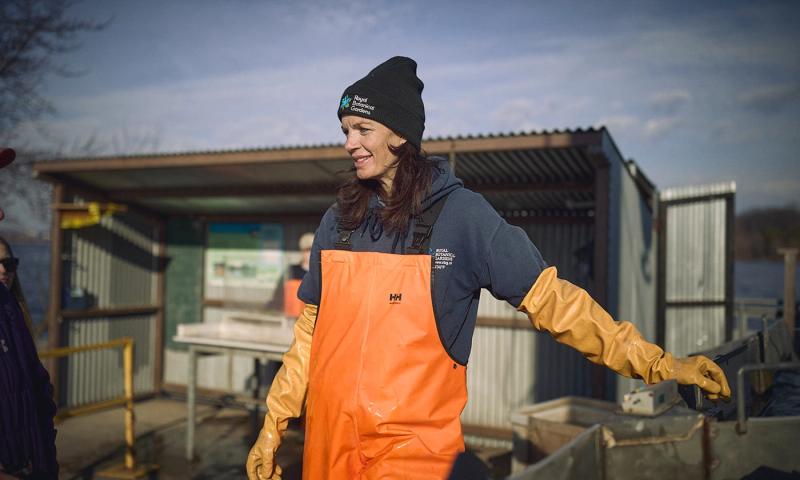
Jennifer Bowman, resplendent in Day-Glo orange vinyl overalls and bicep-length yellow rubber gloves, peers at the hanging scale and calls out a number: “2820!” Next, she unhooks a sling and its wriggling 2.82-kilogram contents from the scale and steps to a nearby table. “We’ll check her for a tag,” she says.
Bowman, the aquatic conservation programs senior ecologist at Royal Botanical Gardens (RBG) at the western tip of Lake Ontario, opens the netting to reveal a long, slender northern pike, its telltale green-brown and linear-yellow-patterned skin glistening in the April morning sun.
“The DFO [Department of Fisheries and Oceans Canada] has been working on tagging some of our top predators,” she explains, holding down the pike with both hands while an assistant waves a wand alongside. “It’s to help keep track of these populations that are still recovering.”
Get our weekly newsletter – the people, places, and ideas revealing where Canada is headed.
After a couple more measurements, she transfers the pike to a stream of water in a sloping steel chute and the fish enters the waters of Cootes Paradise Marsh with a splash.
That pike will soon have plenty of company. Last year, Bowman and her RBG staff sent more than 7,700 large, native fish down that same chute – one tiny piece of a much larger, first-of-its-kind barrier-and-lift structure known as the Hamilton Fishway. Those fish (13 different species, with white suckers and brown bullheads most common) were collected when they reached the Fishway after coming up the narrow channel that connects Cootes Paradise with Hamilton Harbour, looking to get into the marsh to spawn.
Since the Fishway was built in 1996, it has enabled the gradual restoration of the Cootes Paradise Marsh, which, at more than 300 hectares, is the largest remaining coastal marsh habitat in western Lake Ontario. But while the Fishway has allowed hundreds of thousands of native adult fish (more than 30 species) to enter the marsh, the key to its impact, as well as its influence on coastal marsh restoration projects elsewhere, isn’t so much the fish it lets in as the ones it keeps out: invasive common carp.
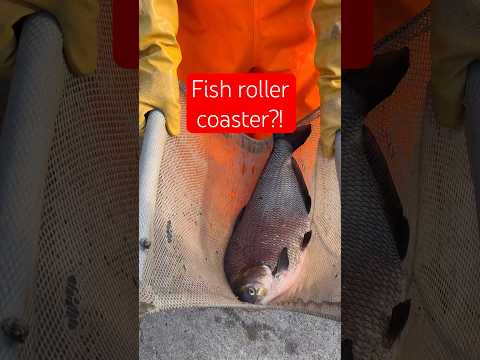
When left unchecked, carp are wetland destroyers. Originally introduced into the United States and Canada from Asia as a food fish in the 1800s, they outcompete native fish, dig up and destroy vegetation while feeding and spawning, stir up mud and render wetlands incapable of supporting almost any native fish or wildlife. Coupled with sewage, nutrient runoff and industrial pollution, the effects are devastating.
“When the Fishway was put in, it was estimated there were 70,000 carp in Cootes Paradise. It was like you could almost walk on them, there were so many,” says Bowman, who grew up nearby, playing in a creek that’s a tributary of the marsh.
Other carp-fighting schemes, such as lowering water levels or installing weirs, as well as large-scale carp harvesting, had been tried without success. But in the mid-1990s, RBG, DFO and other agencies hit upon the idea of a system that would prevent the spring migration of adult carp into the marsh from Hamilton Harbour, while allowing native adult fish to enter and then return to the lake in summer and fall.
The Hamilton Fishway was born, and the success of its simple idea has since inspired a string of new carp-exclusion systems across the country, including Rattray Marsh in Mississauga, Second Marsh in Oshawa and Humber Marshes in Toronto, as well as the massive Delta Marsh at the south end of Lake Winnipeg.
Here’s how it works: the grey metal structure looks like a wide footbridge across the width of the channel. Underwater, a series of metal grates with five-centimetre openings extend all the way to the bottom, preventing any wider fish from getting through. On one side of the structure, there are grated baskets that act like lobster traps capturing larger fish. An operator on deck uses a crane to lift them out of the water and empty their contents into an elevated holding tank mounted on the Fishway deck.
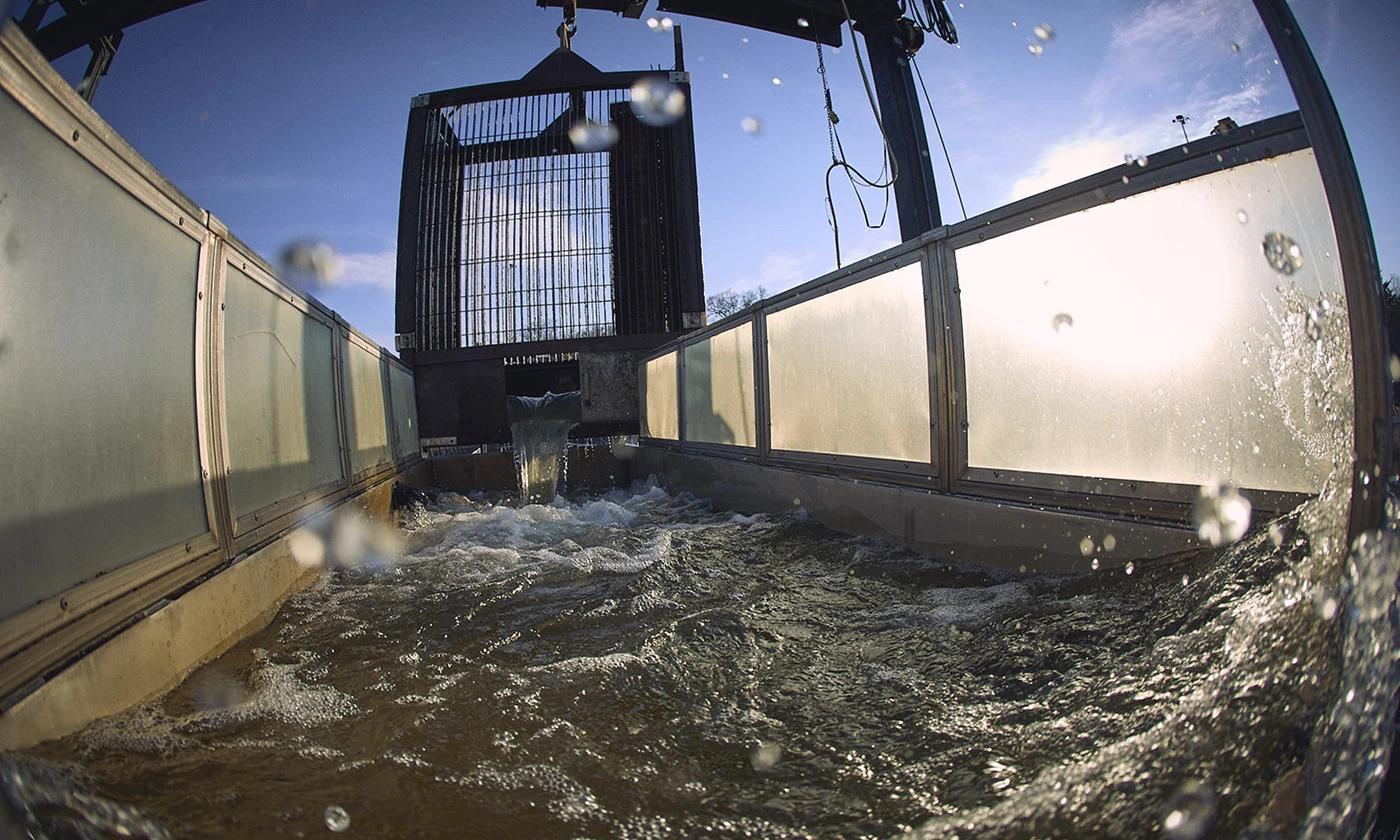
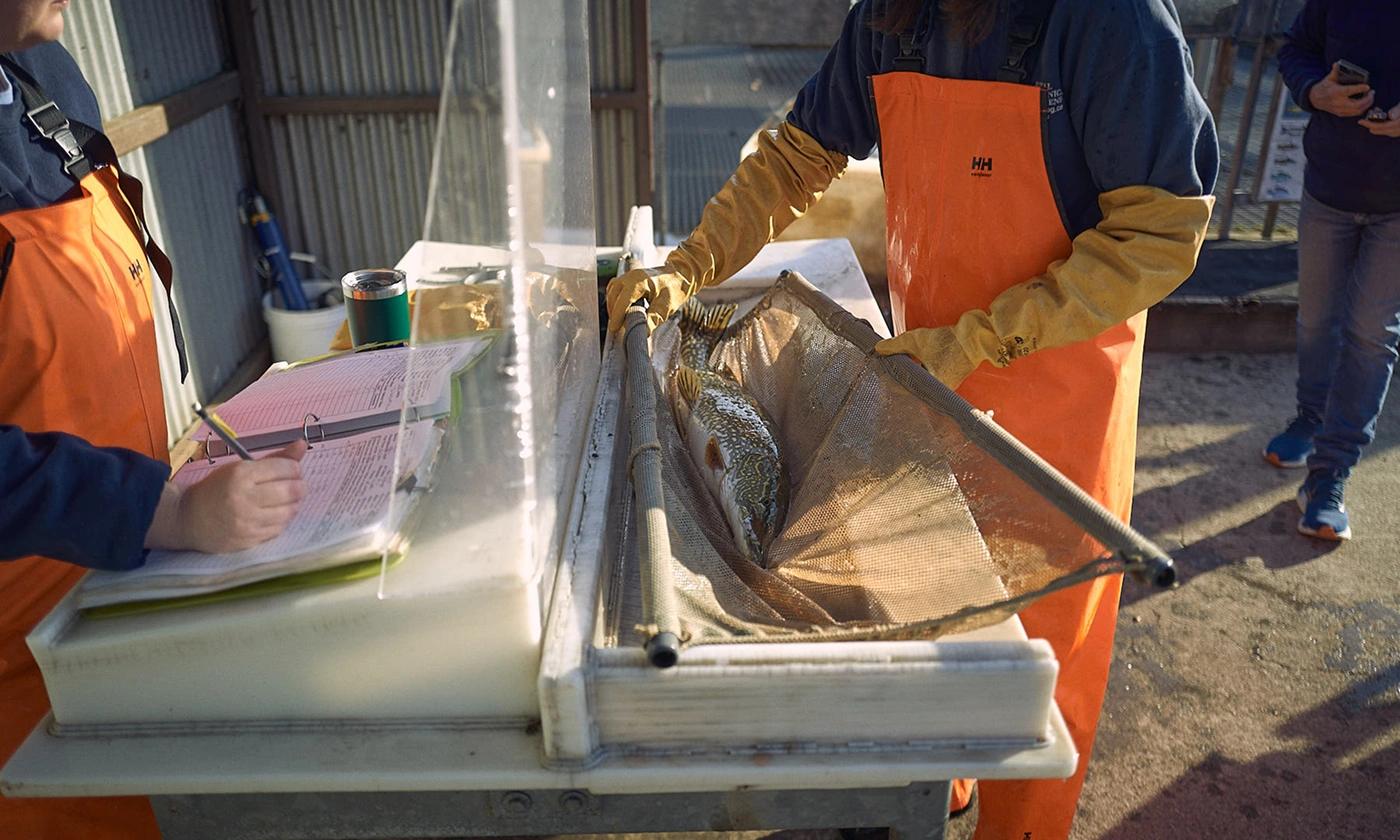
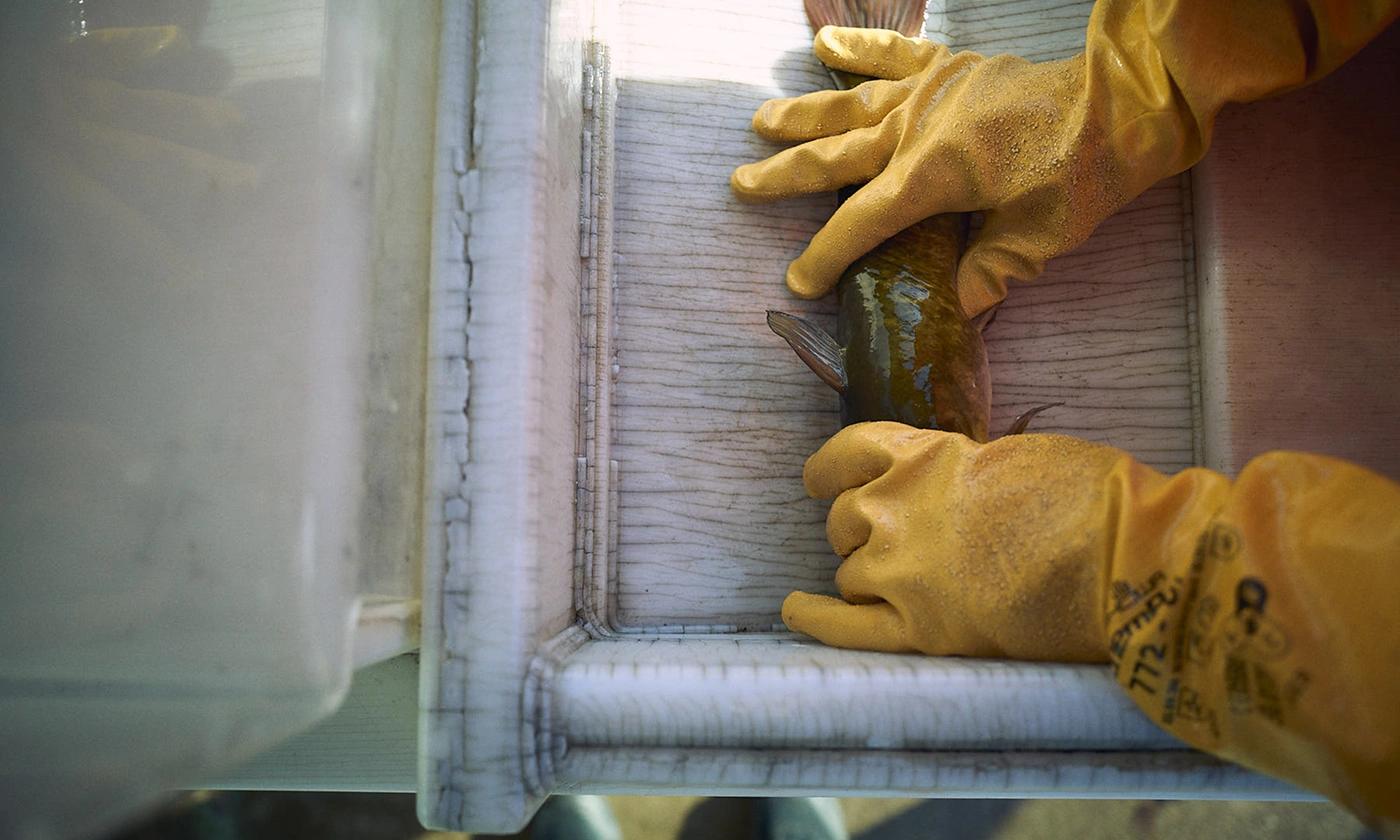
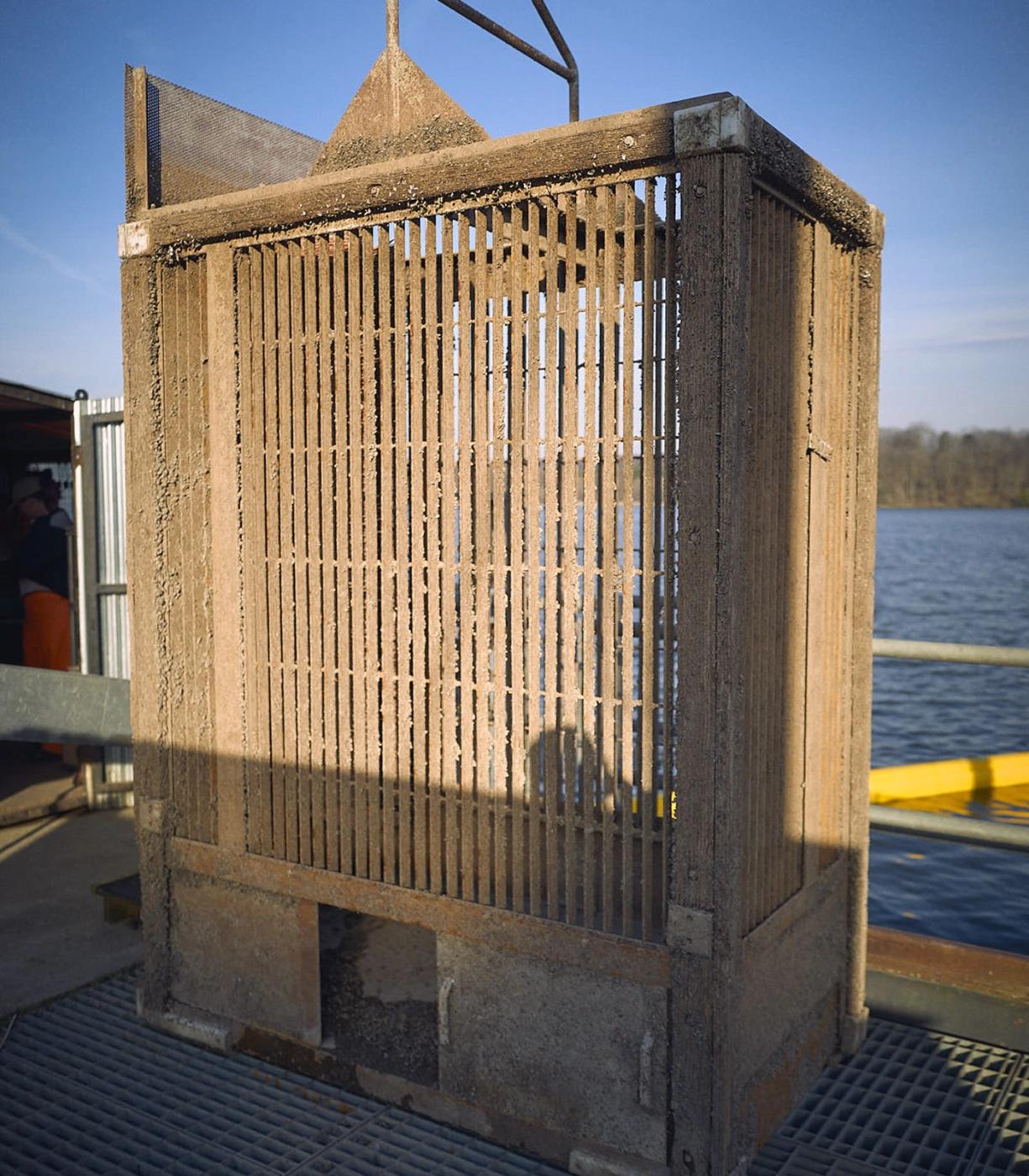
There, a member of Bowman’s team gradually releases the fish down an open metal T-shaped chute where, in assembly-line fashion, they can be quickly identified, counted and sorted. At the chute’s elbow, native fish are routed one way into the marsh (samples of each species are weighed and measured before release), while carp and goldfish are either directed back into the water below the Fishway or removed and culled.
Lifts begin in March as soon as the ice is off the marsh and run twice daily in April, then at a slower rate into summer. Late in the year, when spawning is over and temperatures dip, grates can also be opened to let fish return to the lake to overwinter.
According to RBG’s data, the barrier, which cost $1.5 million to install, has excluded more than 95 per cent of that original estimate of 70,000 carp since the time of construction. Bowman says that by limiting the carps’ access to the marsh spawning grounds, the carp population in the harbour is also declining: in each of the last two years, fewer than 1,000 carp were caught trying to enter the marsh, compared to anywhere from 2,000 to 10,000 in the 20 years before that.
A near-twofold improvement in water clarity is a further sign of success, though it’s still well below the long-term goal. Bowman says these results might have been better were it not for a couple of unusually severe high-water years in 2017 and 2019. The first time, especially, the water was so high that fish were swimming right over the Fishway, including large numbers of carp.
“While it hasn’t been a steady improvement, the general trend has been fewer carp and better habitat in the marsh,” she says.
As well, progress on the carp problem is making other restoration work worthwhile, including stabilizing shorelines by planting native vegetation to restore habitat and reduce erosion; removing invasive plants like phragmites and mannagrass that have taken over large swaths of meadow and emergent marshlands; and re-establishing stream channels and underwater structures by building berms out of old Christmas trees that capture sediment and provide new footholds for native vegetation.
Between 2020 and 2025, the amount of vegetated area in the Cootes Paradise Marsh essentially doubled, from around 80 hectares to more than 160. Habitat restoration like that is also key to bringing back more birds, reptiles, amphibians and insects. “Once they have their native plants, they show up and they will recover,” Bowman says. “That’s all you have to do.”