Olivia Chow stood against the backdrop of the city, Toronto glittering behind her, as she recounted the time she called 911. Her dad, suffering from pneumonia, wasn’t breathing. She knew she needed help. “The wait seemed like it was eternal,” she recalled to gathered reporters. “It was so long. It probably was just a couple of minutes. I was just panicking.” It was May 2023, and Chow was campaigning for mayor, in part on her promise to tackle the city’s longtime problem with lagging 911-call wait times. For years, the Toronto Police Service had been failing in its role of managing the city’s 911 line. They’d fallen far below industry response-time standards. Staffing shortages meant callers in crisis were waiting up to six minutes on the line, 360 eternal seconds of panic. According to industry standards, those calls should be answered within 15 seconds. It was a problem Chow was determined to fix.
Later that summer, on a tiny Greek island, a serial entrepreneur named Ben Sanders was on hold in the middle of the night. He’d recently sold his latest company, a digital paperwork platform for governments, which had given him some financial and temporal runway to cook up his next dream. He was also a new dad, and he’d taken his partner, Megan, and their daughter from their off-grid base near Whitehorse on a trip to Europe. It was his responsibility to get their toddler a daycare spot for their impending return home. Without his executive assistant to help, post-exit, he was again confronted by the mundanity of everyday life. Which is to say, he was spending an interminable amount of time on hold. He began to flush with indignation. How long were people just like him spending on hold all over the world, even at this very moment? Was this a problem he could work on solving?
His experience that night, combined with a wonky appreciation for government and a childhood obsession with the police, would eventually lead Sanders to create Hyper, an AI voice agent answering calls for police departments all across Canada and the U.S. For now, the technology Sanders and his co-founders have created answers calls from the non-emergency line, a 10-digit non-emergency number police services offer for callers who need help but aren’t necessarily in critical distress. What many people don’t realize is that those calls are answered by 911 dispatch, too, in between emergencies. Hyper, Sanders says, is here to help free up the lines for humans in need.
But his vision for Hyper is much bigger than responding to noise complaints or redirecting callers to the collision report centre. It’s going to require the deep trust of a skeptical public. And it’s going to get here sooner than we think.
Police forces, and 911 dispatchers more specifically, are under siege. According to a 2023 report from the International Academies of Emergency Dispatch and the National Association of State 911 Administrators, one in every four jobs at emergency call centres is vacant. Burnout rates are high. Regular overtime is a given. Cascading social crises mean emergencies are on the rise, too. Across Canada, health-care systems are overburdened and social services are taxed. At 911, the public knows, someone will always be on the line. That puts immense pressure on the people on the other end of the call.
Another report, also from 2023, said that 82 per cent of centres across the U.S. were understaffed and struggling with hiring and retention, citing low pay and stress as the biggest obstacles. About 75 per cent of respondents reported feeling burned out, and only 18 per cent use the wellness support services on offer to help. Training is also an issue: an overburdened workforce with little time to teach left 38 per cent of respondents feeling unprepared to deal with emergencies such as an active shooter and 25 per cent feeling unequipped to respond to mental health calls.
Technology in the industry is lagging, too: most 911 centres can’t accept video calls, for example, and fewer than half reported being able to get accurate location information from mobile callers.
Getting butts in the chairs, administrators say, is beyond difficult. It’s a tough sell: applicants face psychological and medical assessments, resilience tests and background checks for a job that requires gruelling shift work, guaranteed overtime and immense responsibility. The job has never been easy, but some dispatchers say COVID has exacerbated hiring challenges by shifting work priorities toward balance. That’s not something public safety work can offer.
“It’s just not something that people want to do,” says Roxy Van Gundy, director of the Lyon County emergency communications centre in Kansas and vice-president of the National Emergency Number Association (NENA), a non-profit professional organization representing 911 dispatchers in the United States. (Canadian forces adhere to their standards, too.) “My folks have shifts where they can’t get up for 12 hours,” she says.
Enter Hyper. One of several 911 voice agents on the market, and the only Canadian offering, Hyper touts itself as a filter to help dispatchers address real emergencies more quickly.
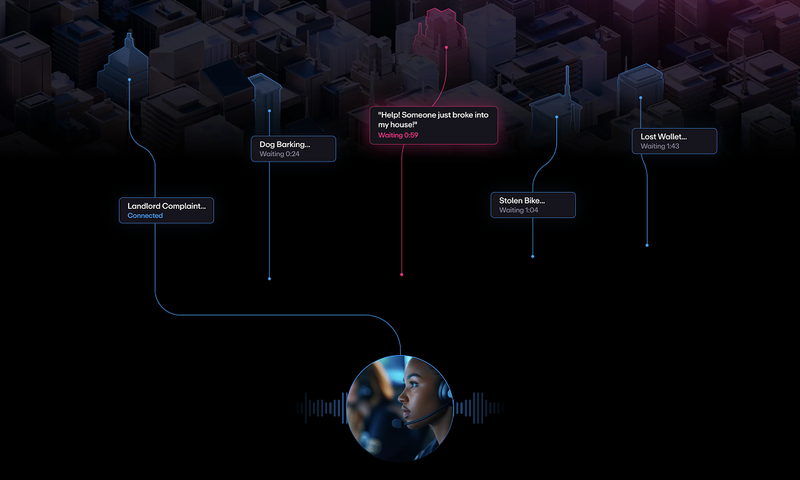
Take the Toronto Police Service (TPS), for example. Of the 1.8 million calls the service fields each year, an estimated 57 per cent aren’t emergencies. Some are people looking for guidance on how to report a collision, how to fix their broken dishwasher or how to get home from a Drake concert. Others are pocket dials or hangups. Some people call 911 because it’s easier to remember than the longer, 10-digit number. They’re all calls 911 dispatchers need to make their way through deftly and fast, while earning a salary that starts at $83,538 a year.
NENA sets out a standard that most agencies across Canada and the U.S. voluntarily strive to adhere to: 90 per cent of all 911 calls should be answered within 15 seconds. In 2021, the last year for which numbers are publicly available, TPS met that goal on only 10 days.
Why not just hire more people? In Toronto, at least, they did. In 2024, TPS initiated a hiring blitz, and the following year, it filled 90 communications operator positions, bringing the service’s total dispatcher count to 301. But in critical moments, wait times continued to lag. In August 2025, a news story broke about a shooting in the west-end Mount Dennis neighbourhood of the city. A teenager had been shot, and the person who called it in to 911 was on hold for six minutes and 42 seconds before anyone answered. The boy died, and again, Mayor Chow promised to do more to reduce wait times. Later that month, another report said hold times on the non-emergency line had reached upwards of 12 hours.
In some ways, Ben Sanders’s life aptly prepared him to tackle the problem. As a boy growing up in Thompson, Man., Sanders wanted to be a police officer so badly he carried around a cap gun, had his mother sew yellow stripes onto his navy sweatpants and wore an orange lifejacket around town for a year to mimic a bulletproof vest. In high school, on the advice of his mom, he sent a wave of letters to idols like Microsoft co-founder Bill Gates and astronaut-turned-politician Marc Garneau. Garneau actually wrote back and said if Sanders was ever in Ottawa, he should look him up. Sanders did. He asked him how he could become an astronaut and recalls that Garneau looked at him and said, “Well, that’s virtually impossible, statistically speaking.” But he gave him a list of things that would bolster his candidacy and enrich his life even if he didn’t make it, including pursuing an engineering or medical degree and becoming proficient in public speaking. Sanders wrote the list down on a piece of paper, laminated it and carried it around in his wallet for years.
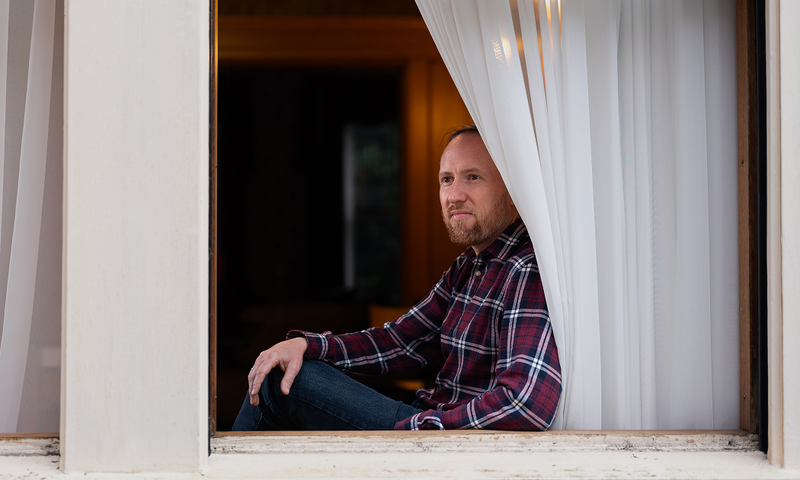
After a year as a parliamentary page, Sanders chose to study electrical engineering, inspired by Garneau, at the University of Waterloo. He then went to work on the Canadarm project and at BlackBerry before (literally) changing gears to be a bike mechanic for Mountain Equipment Co-op. After a stint in Silicon Valley building Presto, a voice agent for drive-thrus that’s now at Applebee’s all over the U.S., he moved to Whitehorse to help develop a tech ecosystem in the North as a business adviser for the Yukon government.
Sanders has long had the obsessive quality that fuels successful startup founders. He was 11 when he started his first company, a candle-making business called Nightlights by Benjamin. After university, he turned a cross-Canada bike ride with a friend into a speaking tour, stopping at 29 high schools to encourage students to study STEM. His burgeoning interest in government led to launching a bid for the federal Liberal party seat in the Yukon in 2014, handing out buttons that read, “We need a new type of BS in politics.”
When that victory didn’t transpire, he opted to put his engineering background to use working on Clearco, a fintech startup that briefly reached unicorn status, privately held at a $1-billion valuation. He then built Proof, his digital paperwork platform for governments, founded in part from an off-grid cabin in the Yukon and later acquired for an undisclosed sum. It was from there, in 2023, that Sanders found himself in Greece, trying to get his daughter into daycare, while casting about for his next great idea.
His mother’s work as a radio host for the CBC in Winnipeg had long instilled in him the power of voice as a tool for influence and connection. When ChatGPT hit the mainstream in 2023, he knew it was only a matter of time before someone connected voice to it. At first, Sanders imagined Hyper as a kind of executive assistant on steroids. Then, he thought bigger: what if a digital clone could set your appointments or even have sophisticated conversations on your behalf? What if the prime minister of Canada could have a conversation with every single Canadian? He founded Hyper, short for HyperYou, in the fall of 2023.
In April 2024, his father sent him a news story about the mayor of Winnipeg running on the promise of reducing wait times for callers to the city’s 311 line. It could be an interesting use case, he said. It was Sanders’s first aha moment. He began to get the old team from Proof back together, and he also began to chat with fellow engineer Damian McCabe, a tech entrepreneur who’d also worked as a product developer at Uber, Instagram and Facebook. The pair had met years before, in the Zoom breakout rooms of Founders Forum, a support group for entrepreneurs that Sanders likens to Alcoholics Anonymous.
McCabe had his own experience with 911. In 2021, he woke before dawn to his mother-in-law pounding on the bedroom door. She screamed that his father-in-law wasn’t breathing. His hands shook as he punched the numbers, gripped by fear and uncertainty, seconds stretching into agonizing minutes as his family waited for help to arrive at their door.
Under typical 911 protocols, dispatchers hop on the administration (or non-emergency) line if they have a break between 911 calls. But then they’re tied up responding to someone who got locked out of their Airbnb or needs help changing their Netflix password – unable to answer the next emergency call that comes in. What Hyper does is automatically respond to non-emergency calls so the dispatchers don’t have to.
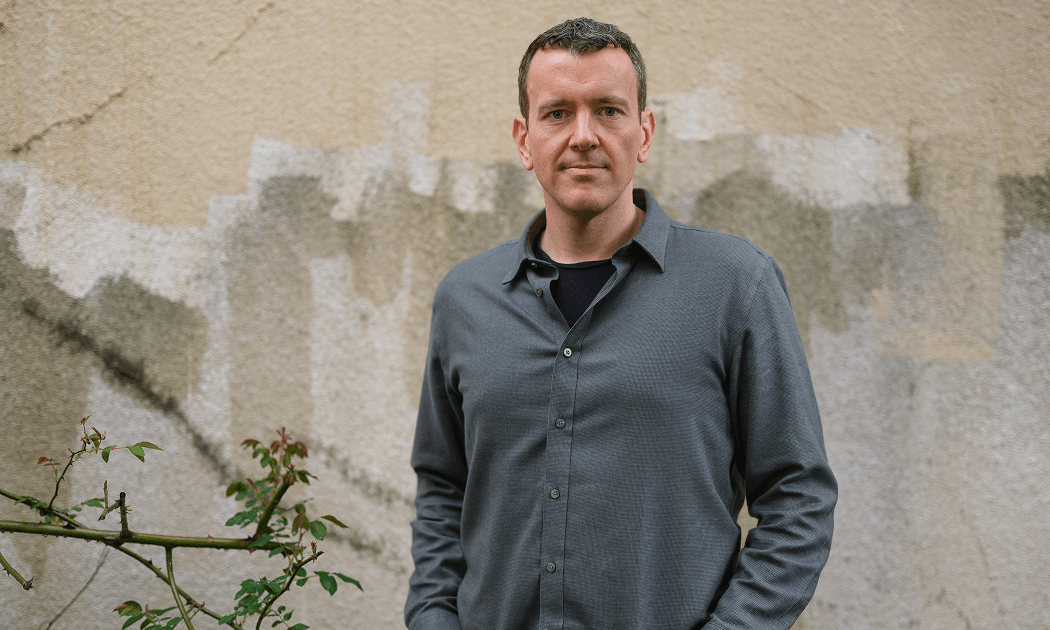
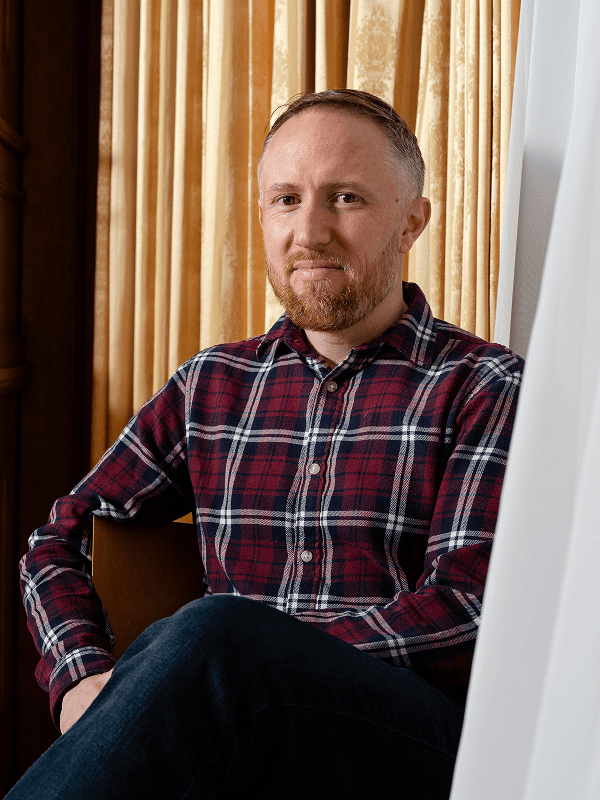
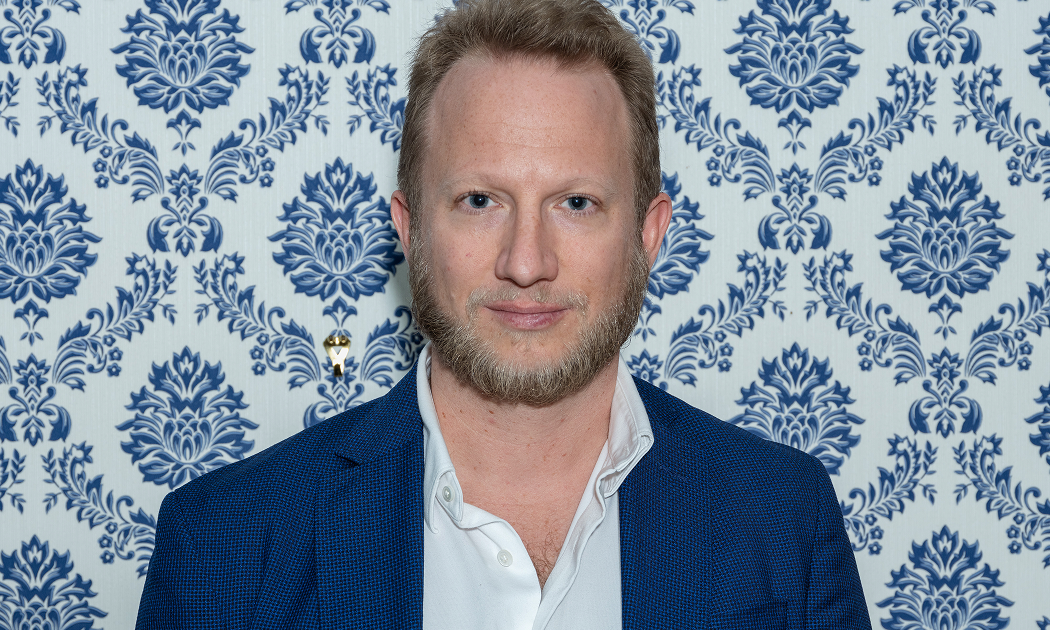
The prospect of developing the AI agent presented endless technical puzzles to solve. At first, the tech took so long to process what a caller was saying that it left them hanging for eight seconds or more, as the machine determined how best to respond. “Two years ago, nobody could get the lag time down under seven seconds, nobody in the world,” he says. “The building blocks were still pretty rough.” It didn’t stop them from trying. In May 2024, the team met with Peel Regional Police to shadow their dispatchers as they spun from screen to screen, navigating a dizzying array of interfaces to log and direct their calls. Seven months later, in December 2024, Hyper took its first live call, with 10 people on the line to ensure it went smoothly.
Peel signed on, then Winnipeg, then Halton Regional Police. By July 2025, Hyper had raised $8.3 million in funding from a slew of U.S. and Canadian venture capitalists. Today, more than two dozen forces are using Hyper, including the Toronto Police Service, the fourth largest in North America, which went live with the service on March 10.
Currently, Hyper is equipped to respond to 200 types of calls. It draws on large language models created by OpenAI and Cohere (both investors in Hyper) and is schooled based on scenarios Hyper inputs. Its AI agents offer real-time translation in two dozen languages, can identify the difference between “fire” and “fireworks,” and know to pass a caller along to a human if they ask to order a pizza (a coded phrase now in use by some abuse victims who need help but can only answer yes or no questions).
If Sanders is well-suited to tackling the 911 problem, the San Francisco-based business accelerator he participated in earlier this year is uniquely suited to help him sell his solution. Hacker Fellowship Zero (HF0), an elite program that helps tech founders scale businesses at lightning speed, operates out of a historic mansion overlooking the city’s lush Alamo Square Park.
When I meet Sanders there in mid-February, halfway through his three-month stint at HF0, he bounds up the mansion’s steps in the standard Bay Area uniform of Blundstones and athleisure wear.
“Kids are the only things that can’t run on time,” he calls behind him as he scurries down a narrow staircase into the basement, shedding layers in his wake. He’s just run his one- and four-year-old to daycare and school, and he’s late for his morning high-intensity interval training class. He burns through 20 minutes of squats, explosive mountain-climber exercises and ball slam reps before he’s back out the door and heading for the stairs. “Thanks, Simone,” he calls to his personal trainer, who singsongs “eat lots of protein” in response, just as he’s rounding the corner to pass the tubs of protein powder stacked outside the door.
The Hyper team – co-founders Sanders and McCabe and a gaggle of coders and engineers – is living in the mansion for the duration of the accelerator program. HF0’s financial backers include Marc Andreessen of VC firm Andreessen Horowitz, Fan Zhang, founder of Sequoia Capital China, and Naval Ravikant, founder of AngelList and an early-stage investor in companies like Uber, Twitter and Postmates, as well as Google’s AI fund. It’s an influential roster that puts Hyper on a fast track toward more capital – and connections that will help the team make deals with as many of the approximately 18,000 police forces in Canada and the United States as humanly possible.
The accelerator, open only to repeat founders, gets between 10,000 and 27,000 applications for its 10 slots per session, making it tougher to get into than Harvard. For 12 weeks, it strips away the tedium of modern life so those accepted can focus on two things: code and profit.
Inside the mansion, participants’ laundry gets done twice a week. A personal chef cooks their food. Workout classes are on offer from a personal trainer. A cold plunge bath is theirs for the plunging. (“I stopped when I felt like I was having heart palpitations,” one of Hyper’s engineers tells me evenly.) Wristbands worn by founders measure heart rate, physical activity and sleep. The stats are tracked and gamified: Sanders is listed as “Colonel Sanders” on the leaderboard that scores who can relax and recover the best, all while driving revenue for their respective businesses ever higher. (He’s in fifth place for sleep quality that day.) Water dispensers are temperature-regulated, too, but with no discernible “on” button, and I can’t for the life of me get one to work.
In addition to the perks, which include stipends for child care (Sanders’s partner and two kids are living in a home around the corner), the accelerator offers coaching, social accountability and dinners with founders of companies like Airbnb, all with an eye to pushing teams to reach ever greater heights within a 12-week window. A countdown clock to “demo day” – when teams present to potential investors – reminds them from the dining room how much time they have left. Here, optimization is measured in seconds, not minutes.
It’s the perfect environment for someone like Sanders, who has no off switch, as far as I can tell. “Their whole ethos is, ‘Let’s help you in other ways, too.’ And though it might seem a bit bougie, what it really is, is like taking away all of the distractions, so we can stay in flow, so we can truly inhabit this belief that anything is possible, like on a whole other level. And there’s some magic that happens when you do that,” Sanders says. “It’s hard to be the best in the world at something on a nine-to-five schedule.”
In last year’s spring session, the top team broke US$20 million in annualized revenue, and the average valuation of companies after demo day was US$82 million. The year before that, the spring session saw four repeat unicorn founders participate. In exchange for the royal treatment, HF0 takes a three per cent stake in the company.
By 8:45 on Monday morning, Hyper’s pod is filled with coders. Sanders, McCabe and their third co-founder, former paramedic and 911 tech executive Reinhard Ekl, were meeting until 3 a.m., and they’re back at it this morning, running on more protein and vibes. At Hyper’s workstation, in one of the repurposed hotel rooms upstairs, coffee cups compete for desk space with B12 supplement bottles and copies of The Artist’s Way. The team is trying to sell. They’re targeting 5,600 police forces across the U.S. and Canada, which means 5,600 possible deals to be made in the next six weeks before they present their progress to prospective investors on demo day.
“On a scale of 1 to 10, how are we doing today?” Sanders asks each of his direct reports as they join their individual Zoom calls. As the sales reps talk about skiing at Whistler, B.C., and weekends spent visiting puppy farms, Sanders takes a bite of turkey bacon and eggs from a compostable dish. Whenever someone returns the favour and asks how he’s doing, he doesn’t reply, barrelling ahead to deals about to be made or obstacles he can help resolve. A Zoom call connection goes down – even here, in the beating heart of the world’s AI boom, there are technical difficulties.
A two-minute gap between meetings means enough time for a bathroom break. As he sprints back into the conference room, he holds a fresh, glistening coconut water in his hand. “On a scale of 1 to 10, how are we doing today?” he asks again.
“Smile, have fun, be present, take a breath,” Sanders says, stretching his arms out in a pec fly before Zoom bobbleheads fill the screen. “There’s a friend of mine flying to the moon this month. What we’re doing here is easy.” This morning, he’s sitting in another mansion, just down the street from HF0 base camp, in a living room wallpapered in baroque paisley, with windows ensconced by velvet drapes. They’re getting ready to pitch hundreds of police administrators on the value of adopting Hyper.
Sanders and Ekl are poised on a couch shaped like a jellybean, in pressed button-downs, while McCabe runs back and forth before them in sweat-drenched workout gear. A soft light hanging overhead gives the founders an angelic glow. McCabe grabs an antique phone from a cabinet of curios in the corner, placing it between Sanders and Ekl. “It looks like the phone that made the first 911 call,” Ekl says. Nearby, another shelf holds a stack of play money in hundred-dollar bills.
The duo is hosting an educational seminar for NENA, hoping to demonstrate how Hyper has helped forces in San Diego, Lyon County and Toronto. Six hundred people are registered. They’re treating it like a sales opportunity because, essentially, it is. The association initially offered them a time slot in April 2026, but Ekl convinced them to bump it up by a couple of months so it would fall within the HF0 timeframe. As part of their work at the accelerator, they’re trying, Sanders explains to me, to find ways to speed up “trust-building.” Presenting to a group of police officers, using case studies of forces that have adopted the technology, is one way to try.
Van Gundy, the Lyon County director, describes how Hyper’s AI agent has helped bolster the force’s 911 capacity and address challenges like staff shortages, a shallow hiring pool, high burnout rates and limits on what she can pay her dispatchers to incentivize them to stay. Her telecommunicators, she says, were spending 85 per cent of their time on non-emergency calls, all day long. Now, “every caller that calls our non-emergency number gets to speak to our girl Betty,” she says. Betty, Hyper’s AI agent, whom they’ve named after their favourite human operator, handles up to 10 types of calls, including jail transfer information, unlocking doors on the local university campus after hours and what to do when the cows get out. If a call comes in that goes beyond her 10 call types, she escalates it to a human. Since Betty joined their team on Dec. 1, she’s fielded 6,096 calls, Van Gundy says. She was able to answer 25 per cent of them without the aid of a human.
Calling in from Toronto, TPS superintendent Greg Watts says in his city the non-emergency line never stops ringing. For years, the 911 line has been dogged by increasing wait times. News stories reported a family waiting on hold for five minutes as a toddler choked on his cereal, before the father eventually hung up to save his son’s life himself. Others waited five hours to make a simple parking complaint. Watts says Toronto decided to implement Hyper alongside a hiring spree, not instead of one. “Is there a little bit of risk in putting an AI solution on the non-emerg line for people that are actually calling based on an emergency?” he asks rhetorically, then answers his own question. “Yes. Am I willing to adopt that risk? Yes.”
Watts’s goal isn’t to revamp emergency response, he insists. It’s to bolster the support his dispatchers sorely need to do their jobs better. “We’ve been very firm that this is a non-emergency tool, this is not a 911 solution,” he says.
Van Gundy agrees: “I don’t think that’s Betty’s place. I don’t think that’s AI’s place. Having that human knowledge is so important in an emergency call.”
But Hyper’s goal is to be a 911 solution, which presents an interesting challenge for Sanders. He knows the bridge over that chasm of doubt is trust. “So when you think about hiring a really great call-taker,” he says, “imagine if you could hire one that never had a wait time, that could work 24-7 in dozens of different languages and was five times more economical too, right? Always reliable, never late for work, never sick. Wouldn’t you say yes?”
To the Hyper team, the world of AI is endless optimism and possibility but that openness hasn’t yet catalyzed for the public. A KPMG and University of Melbourne study conducted last year found that just 46 per cent of global respondents trust AI, even as they’re using it regularly.
It’s not hard to see how horribly wrong this could all go: callers in crisis stuck in an endless feedback loop with a bot that continues to misunderstand or misdirect them, as critical seconds tick by. Take one of the ways the tech butted up against its users in Hyper’s early days in a police jurisdiction. Callers, used to a phone tree that would transfer to a person if they pressed “8,” repeated “8” over and over to the AI agent, which didn’t understand and kept asking them to clarify their response, over and over, snagged on a bug. It hadn’t been programmed to know what “8” meant.
The team is tight-lipped about other, bigger mistakes the AI has made, declining to share data about error rates. And when I reach out to the four Canadian police forces using Hyper, none of them want to talk about it. Peel Police, the first force to sign on, declined to comment on its effectiveness or the measures they’ve taken to ensure that using this technology is keeping the public safe. So did Toronto, Halton and Winnipeg. Hyper itself, through a partnership with another company called GovWorks, is now outsourcing some of its quality control to AI, meaning another AI program is reviewing the work of the AI answering the calls. “We have the ability to go in and review if the police request it,” Sanders says.
Van Gundy, the emergency centre director in Lyon County, Kansas, is more open about the ways it has helped and hindered her force. Hyper has added net benefit to her centre, she says, but it hasn’t been perfect. When they first signed on, Hyper’s programmers loaded their 10 call types into a test number that Van Gundy and her colleagues spent four months calling, trying to poke holes in what Betty was saying, using different accents, tones of voice or emergencies as tests. In some cases, she offered to send officers right away when on-scene assistance wasn’t required. Just this month, someone called in and asked, “Do you work in Spanish?” and Betty responded, “No, I only speak English,” even though she’s programmed to speak two dozen languages, Spanish included. But any time she wasn’t sure, or a call exceeded her capabilities, she transferred it to a human.
Despite the glitches, in mid-March, Van Gundy pitched her superiors on extending Hyper’s contract. She played them a call of a dispatcher giving CPR instructions to a person on scene who was trying to help save someone’s life. “Imagine she has to put her on mute so she can answer another call about a parking problem, or the dogs getting out, or people having neighbour problems,” she says. Instead of toggling between several monitors, taking notes and flagging issues for the other dispatcher on shift, she could dial in, focus and make sure she kept the person alive.
To live in San Francisco in early 2026 is to confront AI gobbledygook on the daily. It wraps city buses and blares from billboards. Everything is optimized. Everything is on the precipice of change. “Welcome to AI country, population: everyone,” one says. “Book your hotel on the moon,” reads another. “AI agents are humans, too,” insists a third. I can’t shake the sense that here, the conversation, powered by techno-optimism, has rocketed far beyond whether or not this is good for us and focuses instead on how radically we can change the world – for good or for ill.
The last time the Hyper team shadowed a group of dispatchers, in Toronto, a man called in. He’d just found his son hanging from the rafters in the garage. The dispatcher stayed on the line until the police arrived, urging the father to keep talking, reminding him that help was on its way, that on the other end of the line there was a human who cared. Is that something we can teach a machine to do? “Most people who call 911, they’re not predominantly looking for compassion and empathy. They’re looking for professionalism,” says Ekl, Hyper’s COO. “I think people don’t want their first responders to be nice. They want first responders to help them in the worst situations they can imagine.”
Besides, he says, there’s a whole generation of people more comfortable talking to an AI than to a person. “Maybe that’s not true for us,” he says. “But for younger people, they don’t want to talk to a person, right? They talk to an AI, and they know everything they say will be listened to and retained. Right?” (One survey last year, from Deloitte, found that three-quarters of Gen Z-ers have used tools like Claude and ChatGPT.)
That might be true, but it doesn’t eliminate the ethical minefields raised by our public services adopting technology like this, according to Stephen Neville, an academic and principal investigator of a Privacy Commissioner of Canada project called “Losing your voice to AI.”
Beyond concerns about mistakes and biases baked into the large language models Hyper and many other startups are drawing from are the ones that surface when you think about AI-powered emergency calls as a database filled with sensitive biometric information. “The kinds of things I worry about are with ICE and racial profiling that’s happening in the U.S.,” Neville says. “What if it’s being used to detect accents, or infer that someone could be an undocumented person?” ShotSpotter, a gunshot detection software in California, has been criticized for sending unnecessary police presence to predominantly Black and Latino neighbourhoods in the States. Technology is not less immune to the biases we all contain; it’s just less accountable.
Can AI handle a crank call? Someone who might be calling with details of a perceived emergency but who actually needs mental health support? Could a machine calm down a child enough to administer CPR to an unresponsive parent, or stay on the line with someone as they take their last breaths? Can it intuit from inflections in a caller’s tone of voice, or vague language, or the rapid-fire jumble of information humans deliver at their most vulnerable? Not today.
In Deep Medicine, a book about AI’s potential to revolutionize health care, cardiologist and academic Dr. Eric Topol writes that where it excels is in identifying broad patterns. What it can’t do is provide “the power of detailed, careful observation.” As I discuss the possibility of an AI agent answering a 911 call with more and more people, reactions begin to take a similar shape. An initial rush of mistrust makes way for a tacit allowance that it could help ease a clear burden: AI as secretary, AI as complement, removing some of the drudgery but not supplanting the humans. And that’s the challenge Hyper faces, whether or not the tech can eventually do a 911 dispatcher’s job: the gap between what the company wants Hyper to be and what the public will accept. Are we not our most human in our moments of need?
Before leaving San Francisco, Sanders suggests taking a self-driving car home for the night and calls me a Waymo. A white Jaguar pulls up to the curb across the street from the mansion and I climb inside, pushing the blue ignition button that glows up at me, pallid in the darkness.
When I asked Sanders if he worries about Hyper’s AI making mistakes, he said no. Waymo self-driving cars get into accidents, too, he says, but far less often than humans do. But humans, I think to myself, can be held accountable. To each other. To ourselves. To the father on the other end of the line facing his darkest hour. The car pulls smoothly away from the curb. An automated voice reminds me to buckle my seatbelt and, moments later, I’m outside my hotel scrambling for the door. Before I leave, I turn back. “Thank you,” I start to say, reflexively, before I remember that no one is there.